• Skip to content
  • Skip to primary sidebar

420 Department

Over four hundred and twenty things

  • Home
  • Add Listing
  • Contact

Staff Writer

A Little More Country, But Getting Ready to Rock and Roll

December 18, 2018 by Staff Writer Leave a Comment

The continuing trend of individual state approvals of cannabis use along with the recent end of prohibition in Canada have sparked a heightened level of interest in the U.S. Cannabis industry among a larger and more sophisticated pool of investors.

This interest has been further inspired by the U.S. Federal Government’s continued reluctance to aggressively interfere with individual state permissions despite early on threats by the Trump Administration’s Department of Justice led by the recently dismissed Attorney General Jeff Sessions.

We continue to believe that the rescission of federal cannabis prohibitions is inevitable, the question is when. Given the confluence of reform measures at both the state and federal levels we are optimistic that a first step for meaningful change to federal policy could come as early as next year with the passage of The STATES Act (a bipartisan bill providing state protections under the Tenth Amendment).

The complexity of the U.S. cannabis industry has been exacerbated by the consequences of states operating within the confines of closed economies that strive for their own interpretations of legitimacy under the shadow of existing federal laws. This variation of standards from one state to another carries an inherent uncertainty for businesses and investors with respect to how the industry will operate subsequent to the delisting or reclassification of cannabis as legal standards evolve.

We have in the past promoted a bullish stance as to the prospects of the cannabis industry’s potential development. Beginning with our first publication, “The GreenWave Report: State of the Emerging Marijuana Industry – Current Trends and Projections” (October, 2014) we suggested five primary underpinnings we believed would sustain development and growth moving forward towards national legalization. Since then, we have observed a steadfast progression on all fronts:

1. “Compelling economic benefits that are derived from the creation of new jobs and tax revenues”. Since 2014, we conservatively estimate the cannabis industry has created ~100K jobs in the U.S. From 2014 through the end of this year, we estimate total sales tax revenues (medical and recreational) will have totaled $3.5 Billion (excluding tax collections from wholesale and manufacturing).

2. “The U.S. Department of Justice planted the seeds for reform by allowing each state to determine and enforce its own marijuana laws under a set of mandated guidelines established by the Obama Administration (“Cole Memo”)”. While the federal government has continued to maintain the prohibitive legal status of marijuana, the pressures brought to bear by the multitude of state and multinational statutes that have locally decriminalized and regulated its use have steadily comforted business development within the industry. Post this year’s elections, there are 33 states (plus D.C.) that allow medical marijuana (up from 24 (plus D.C.) at the end of 2014) and 11 states (plus D.C.) where cannabis is fully legal (up from 4 (plus D.C.) at the end of 2014). Additionally, we expect legislative measures allowing recreational use to soon pass in several other states (including New Jersey and New York).

3. “Shifting opinions and demographics have led to bipartisan support”. Americans in favor of legalization has increased from 58% in 2013 to 68% in 2017 (Gallup Poll). We note 89% of cannabis related bills introduced in the current Congressional Session are bipartisan supported (at least one Republican Co-sponsored) and out of this count, 44% are Co-sponsored with a majority of Republicans. This is a notable difference from legislation introduced in prior sessions (61% and 22% respectively).

Increasing Bipartisan Support for Cannabis Legalization

4. “The Federal Drug Administration (FDA) signals a willingness to understand the medicinal benefits of Cannabis”. Epidiolex was recently approved by the FDA as a treatment for young children that experience severe seizures from epilepsy. Subsequent to the FDA approval, the U.S. Drug Enforcement Agency placed this drug in Schedule V (least restrictive classification). This medication is now commercially available and as we understand, covered by most insurance plans. The FDA approval is significant because it marks the beginning of an inevitable inflection point that will recalibrate and redefine medical marijuana (as it exists today) with precise dosage and efficacy.

5. “The federal government has stepped up spending for marijuana research”. Production requirements for medical marijuana research has increased steadily from ~1,400 pounds in 2014 (up from just 46 in 2003) to ~5,400 pounds earmarked for 2019. Additionally, the federal program has extended eligibility to other participants besides the University of Mississippi which has historically been the sole source of all cannabis research. We believe that the government’s willingness to make substantial further investment in marijuana related research suggests a higher probability that a change to the current Schedule 1 classification will occur sooner than we had originally anticipated.

EXPECTATIONS FOR THE NEXT PHASE OF INDUSTRY GROWTH

We remain bullish on the overall prospects of the cannabis industry and this year’s election results in which 3 states passed reform measures (MI – Recreational Use, MO, UT – Medical), supports our trajectory for its growth potential before federal prohibition ends. Since 2014, we have taken the non-consensus view that every state will permit medical marijuana or fully legalize its use before the end of federal prohibition. Accordingly, we maintain our estimate that the U.S. retail cannabis market could reach ~ $35B by 2022 up from ~ $9.6B in 2018 with much of its growth attributed to newly established markets (fully legal or medical only in all remaining states).

Along the way, we expect the following:

A green wave of consolidation: Subsequent to the initial euphorias of “limitless entrepreneurial potential” fostered by individual state cannabis permissions, unforeseen pitfalls and consequences (such as ill- defined rules and regulations, delays in state license issuances, lack of funding etc.) have taken a toll on many first actor enterprises. These unforeseen consequences of the incremental advancement of legalization from one state to the next has in many ways defined this early phase of development. We predict that some of these new realities will become the cornerstones of a mature cannabis industry.

In our 2014 report, we suggested that “larger players in cultivation will have the ability to accommodate mass market production with higher profit margins due to economies of scale, and smaller competitors will likely need to consolidate for survival”. The headwind of IRS Section 280E (disallows most operating expenses for tax purposes), pressures most of these plant touching enterprises from achieving positive free cash flow. Today we witness increased competition within maturing state markets and as standards become more defined and federally mandated and regulated (under agencies such as the FDA and Department of Agriculture) an economy of scale will be a priority for sustainability and growth particularly as new and sizeable entrants emerge ready and able to compete aggressively (Big Pharma, Big Alcohol etc) .

Maturation of existing markets following the Colorado Peak: We expect Colorado to report flat to negative revenue growth this year which establishes a benchmark of 5 years to maturity (Jan ’14 – Dec ’18). However, the trajectory of growth in any one state may not be congruent with other markets as the velocity of falling wholesale prices is not consistent within each state. Additionally, Colorado may be an outlier because it benefited from “canna” tourism in the early years as the only state to allow cannabis consumption for recreational use. As we continue to evaluate the fundamentals of other fully legal states (Oregon and Washington) we observe that these markets, while not fully mature, have slowed.

State of Colorado Retail Cannabis Sales Projections

Product quality and reliability will likely differentiate business profiles: Within the cannabis ecosystem businesses will establish and endeavor to maintain more specific niche identities. Whether individual enterprises seek to penetrate the market from the lower or upper end of perceived consumer demands, successful market penetration will be heavily dependent upon the allocation of increased branding efforts.

Following federal legalization there will be a “true” divergence of medical and recreation use enterprises: Although medical use legislations were the first to burst the prohibition dam, the development of true medical applications has been slow to develop. Subsequently, many recreational users have previously gained access to cannabis products through quite general qualifying medical conditions (such as chronic pain). As new states implement recreational use, we believe that many of these “patients” have become “consumers” evidenced by the decline in cardholder counts.

decline in medical cannabis cardholder counts

While we do not intend to understate the importance or necessity of medical marijuana as an alternative treatment for many debilitating health conditions, there presently appears to be little distinction between the various designated medicinal use products and those offered in a recreational market. We reiterate our belief that the medical marijuana market will in time, be recalibrated when the pipeline of new, more targeted medicaments become available and as the medical profession gains more comfort in “pushing” a cannabis treatment rather than a patient having to “pull” a recommendation.

Further to this is our expectation that states with both legalized medical and recreational use will continue to evaluate the practicality of merged regulatory regimes. Our research suggests that the medical community’s participation has been insignificant, as ~5% of licensed physicians in existing medical marijuana states are registered to recommend marijuana to qualified patients thus inhibiting the full potential of a medical market. Hence, we believe that it will be increasingly more difficult for medical marijuana sales to thrive in a dual market environment (particularly as our findings suggest that average monthly dispensary revenues are near half that of recreational retail outlets).

It is logical to assume that regulatory oversight and enforcement will be less redundant, more cost efficient, and less confusing in a merged platform. For all intent and purposes, we see this effort presently in most of the states that allow recreational use. (See our report, “The State of Colorado- Year One: The Co-Existence of Legalized Medical and Recreational Use Marijuana Markets” March, 2015).

Banking Reform on the Horizon: The implementation of California’s recreational use market in January continues to raise public safety concerns due to the magnitude of cash collections (we estimate ~ $3.5B in 2018 including sales tax). Unlike sales consummated through the black market, the legal retail channels contain an added element of risk – a known address where a cash transaction occurs (i.e. dispensary). California failed to pass legislation this year that would have created a state backed bank to serve its cannabis businesses. The U.S. market is heavily concentrated in California (~ 40%) and as such we think Congress will soon take action to ease federal restrictions.

With the advent of federal acceptance, cannabis businesses across the board will have access to traditional banking services. This normalized financial environment will enable businesses to not only execute point of sale transactions in a safe and secured manner, but will also enable access to competitive short and longer term financing options.

(See our report, “Navigating the Shoals of Cannabis Banking Regulations” (November, 2017) for more on this subject matter).

The CBD market and ancillary businesses provide compelling investment opportunities. The proliferation and diversity of the various state legalized marijuana markets have spawned numerous and different ancillary enterprises that are eagerly seeking a permanent foothold in the evolving cannabis eco-system. Lab testing, Seed-to-Sale Software and Delivery Services are particularly appealing to us. Also, we believe the CBD market has promise for tremendous growth which will likely ignite soon after the Hemp Farm Bill is passed. We will provide further discussions around these topics in a subsequent edition of “The GreenWave Buzz”.

The post A Little More Country, But Getting Ready to Rock and Roll appeared first on Future Cannabis Project.


A Little More Country, But Getting Ready to Rock and Roll
Source: Future Cannabis Project

Filed Under: Business

Psychedelics – Pathway to Legalization

October 29, 2018 by Staff Writer Leave a Comment

Join a group of lawyers, drug policy experts, scientist and doctors researching and prescribing psychedelics for a discussion on psychedelics.

Psychedelics, Pathway to Legalization – Video 01

Omar Figueroa kicks off our Multidisciplinary Association for Psychedelic Studies (MAPS) / Future Cannabis Project psychedelics event with a history lesson on psychedelics, their use in society, the drug war and its effect on psychedelics, and current federal and state laws related to psychedelics.

Psychedelics, Pathway to Legalization – Video 02

Omar Figueroa, Cannabis activist and attorney, and Natalie Ginsberg, Multidisciplinary Association for Psychedelic Studies (MAPS) talk about psychedelic policy and law.

Psychedelics, Pathway to Legalization – Video 03

Dr. Cole Marta and Ashley Booth are working on a Multidisciplinary Association for Psychedelic Studies (MAPS) funded MDMA-Assisted Psychotherapy study.

They talk about their research with Omar Figueroa, Law Offices of Omar Figueroa and Natalie Lyla Ginsberg, Policy & Advocacy Director, Multidisciplinary Association for Psychedelic Studies (MAPS)

Phase 3 Trials: FDA Grants Breakthrough Therapy Designation for MDMA-Assisted Psychotherapy for PTSD, Agrees on Special Protocol Assessment Preliminary studies have shown that MDMA in conjunction with psychotherapy can help people overcome PTSD, and possibly other disorders as well. MDMA is known for increasing feelings of trust and compassion towards others, which could make an ideal adjunct to psychotherapy for PTSD.

MAPS is studying whether MDMA-assisted psychotherapy can help heal the psychological and emotional damage caused by sexual assault, war, violent crime, and other traumas. MAPS also sponsored completed studies of MDMA-assisted psychotherapy for autistic adults with social anxiety, and MDMA-assisted psychotherapy for anxiety related to life-threatening illnesses.

This event took place on November 26, 6-9pm, Los Angeles

Speakers
Omar Figueroa
, Cannabis Attorney
Natalie Ginsberg
, Director of Policy, MAPS (Multidisciplinary Association for Psychedelic Studies)
Dr. Cole Marta
, Ketamine Assisted Psychotherapy Clinic, principal investigator at the Los Angeles site in the phase 3 trial of MDMA as a treatment for PTSD
Ashley Booth
, Founder, Aware Project: Rethinking Psychedelics, InnerSpace Integration

Thanks to our partners, friends and supporters

MAPS (Multidisciplinary Association for Psychedelic Studies)

The post Psychedelics – Pathway to Legalization appeared first on Future Cannabis Project.


Psychedelics – Pathway to Legalization
Source: Future Cannabis Project

Filed Under: Culture, Policy

Finding Software Solutions in the Cannabis Industry

June 6, 2017 by Staff Writer Leave a Comment

finding-software-solutions-in-the-cannabis-industry-nextec

There is no doubt that computer software is playing a major role in the legal marijuana industry, and will continue to do so for the foreseeable future. An avalanche of information and requirements come with entering the cannabis industry, just as it does with any other industry. It is entirely too much for the human brain to know and catalog. That is why we rely so much on computers and their capabilities in our everyday lives; being successful in the legal marijuana industry is no different.

One of the companies at the forefront of providing software solutions to those in this new and uncertain industry is the NexTec Group. In business since 1994, NexTec has been helping companies connect their systems, update out-of-date software, ensure compliance and improve forecasts for over 20 years. They recently took their expertise to the cannabis industry.

“Based on our expertise in food, pharma, nutra, and traditional growers (like hops and nuts), where traceability and strong compliance are a must, we decided to look into the cannabis industry as a possible new market for NexTec,” Catherine Lindner, Director of Marketing at NexTec, told The Marijuana Times. “One of the members of our management team met other executives in the cannabis industry to learn about the issues they were facing and gaps in technology where NexTec’s expertise could help. From these conversations, NexTec determined that our expertise with food and beverage, growers and process manufacturing can be transferred to the business needs of cannabis cultivators and processors. It was then that NexTec decided to make a big investment and develop a specific ERP (Enterprise Resource Planning) solution for the grower side of the cannabis industry.”

Some of NexTec’s ERP solutions include barcode and RFID tracking of plants, integration into state regulatory systems, 280e cost capturing and a “product recall” add-on that can “identify in 10 minutes where that material (from a bad crop) was used. It will then help identify and quarantine all related materials and create recall communications that can be sent to customers and partners if need be.”

There is a mountain of compliance issues when it comes to the marijuana industry. In many cases, record-keeping and information flow must be accurate and air-tight; there is little room for error. If you are going to be a force in the cannabis industry and plan on sticking around, your software must be able to keep up.


Finding Software Solutions in the Cannabis Industry
Source: Marijuana Times

Filed Under: cannabis industry, Culture, Featured, software, Sponsored

AN APPLE A DAY…

June 5, 2017 by Staff Writer Leave a Comment

Summer is finally upon us! When the sun is shining and the rivers are flowing, nothing beats the refreshment of a cool drink. Personally, I don’t like being dragged down by a beer or soda when I’m out hiking or hanging with friends, and Happy Apple has introduced a crisp, buzzy alternative. I love a grin-causing buzz floating through my body, and the delightful brightness of the apple juice and crisp carbonation tops off the senses.

Focusing on all natural ingredients, Happy Apple has sourced the best apples from none other than Washington state. Their proprietary methods perfectly infuse your Happy Apple with cannabis, so no drink is more potent than the last, and the 10mg serving is perfect for being out and social. I’ll definitely be packing a few on my next camping trip!

The post AN APPLE A DAY… appeared first on Dope Magazine.


AN APPLE A DAY…
Source: Dope Magazine

Filed Under: Cannabis-Infused Beverage, Happy Apple, News, Products, soda, Washington, Washington Edible

City of Detroit Cracking Down on Medical Marijuana Dispensaries

June 5, 2017 by Staff Writer Leave a Comment

city-of-detroit-cracking-down-on-MMJ-dispensaries

Under a new medical marijuana ordinance that took effect a little over a year ago, the vast majority of medical marijuana dispensaries operating in the city of Detroit have been deemed illegal by authorities. In that time some 167 dispensaries have been forced to close their doors, their patients forced to look elsewhere for their medicine.

In total, 283 dispensaries have been told to cease operations since they were not legally licensed under city rules. “None of them were operating lawfully,” Detroit corporation counsel Melvin Butch Hollowell said. “At the time I sent a letter to each one of them indicating that unless you have a fully licensed facility, you are operating at your own risk.”

The coming weeks will see another 51 closures; as of right now, only 5 are legally licensed to operate. Five dispensaries in a city with over 4 million people in its metro area, in a state with almost 250,000 registered patients.

“The voters of the state made medical marijuana legal so we have to manage that in a way that is consistent with keeping our neighborhoods respected and at the same time, allowing for those dispensaries to operate in their specific areas that we’ve identified as being lawful,” Hollowell said. “There was very significant public input in this process.”

While local control and input is a good thing, there is also the suffering of thousands of medical marijuana patients in Detroit, one of the poorest and most crime-ridden cities in the nation, to consider.

For example, under the new rules, dispensaries are barred from operating within a 1,000-foot radius of a church, school, park, liquor store, another dispensary, library or child care center. Can’t that list be pared-down? Why 1,000 feet from a liquor store or another dispensary? What danger exists at 900 feet that doesn’t exist at 1,100 feet in that situation? And this at a time when the Michigan Liquor Control Commission recently lifted a regulation that state liquor stores have to be at least a half-mile from each other.

One can see why a neighborhood would want sensible requirements for any business that operates near their location. But why is medical cannabis singled out for harsher treatment than other industries, like the alcohol sales industry? Where are the people who depend on those closed dispensaries supposed to go?

Some, to be sure, will go to the handful of legal dispensaries left in the city. But most will end up buying from the black market or even worse, going without their medicine completely. Some of those people will migrate back to addictive and deadly prescription drugs.

But I guess as long as Johnny’s Liquor Store isn’t 700 feet from Bob’s Medical Marijuana Dispensary then all is right with the world.


City of Detroit Cracking Down on Medical Marijuana Dispensaries
Source: Marijuana Times

Filed Under: Culture, detroit, dispensaries, Featured, medical marijuana, michigan, News

END 4/20 SHAME: THE HOOD INCUBATOR:

June 5, 2017 by Staff Writer Leave a Comment

The legal marijuana industry is booming. In 2016, it was worth an estimated $7.2 billion dollars and, according to a new report from New Frontier Data, it’s projected to grow at an annual compound rate of 17 percent, which makes it one of the fastest growing industries in America. That’s great news for anyone invested in the cannabis sphere, but there’s just one problem: there’s a huge disparity when it comes to who has entry into the industry.

Cannabis and Race

Photo by Gracie Malley

The war on drugs was created based on racial bias. While marijuana use is roughly equal among blacks and whites, the ACLU reveals that Black Americans are 3.73 times more likely to be arrested for marijuana possession. And when it comes to ownership in the cannabis industry, the race divide is even greater.

According to an NPR interview with Amanda Chicago Lewis—who investigated the effect of the war on drugs on black entrepreneurship—black people own only 1 percent of dispensaries. It’s a big issue, one that Ebele Ifedigbo and Lanese Martin, Co-Founders and Co-Directors of The Hood Incubator, know intimately.

“We [black people] are the ones going to jail for all of this, but when there’s an opportunity to make money and to build a prosperous legacy for our families, we’re shut out of that opportunity,” said Ebele.

“In fact, data sets coming in from the Colorado Health Department and arrest reports have shown that cannabis legalization has caused the disparity for black people to increase,” said Lanese. “So we know that legalization has zero effect on addressing racism.”

And that’s why organizations like The Hood Incubator exist.

“We’re working to make sure that there is equity in the cannabis industry, and that the people who have been most negatively impacted by the war on drugs and racist drug laws have the opportunity to get the same benefits as everyone else,” said Ebele. “It doesn’t make sense that we [black people] have been arrested all this time, and we’re still getting arrested more, even when cannabis is legal. The Hood Incubator is here to make sure equity is implemented.”

…
“It doesn’t make sense that we [black people] have been arrested all this time and we’re still getting arrested more, even when cannabis is legal. The Hood Incubator is here to make sure equity is implemented.”
…

The Hood Incubator

Courtesy of Hood Incubator

The Hood Incubator is a non-profit organization whose aim is to build an economic foundation for black communities, and to bridge the race gap within the cannabis industry. They do this by helping transition underground cannabis entrepreneurs to legal markets through their Pre-Seed Accelerator program and other educational resources.

“Marijuana is one area where communities of color can build a large economic foundation,” said Ebele. “The dollars haven’t already fallen into somebody’s pockets, and big conglomerate companies that keep everyone else out of the market don’t exist. So, there’s a great opportunity to help the black community thrive and prosper in cannabis.”

This opportunity is what The Hood Incubator is trying to capitalize on, but it’s not a simple process. Between permitting, compliance and regulation, there are a lot of barriers to entering the cannabis industry. Plus, it can be a very capital-intensive endeavor, which is a big struggle for many black entrepreneurs, explains a study by Princeton University.

“Study after study has shown how much harder it is for black people to get a loan, let alone investor money,” said Ebele. “The channels that we use to secure funds are not as robust as they are for white communities. The problem is that in the cannabis industry right now, it’s very much about who you know.”

That challenge is one of the main things The Hood Incubator is looking to overcome with its Pre-Seed Accelerator program.

The Pre-Seed Accelerator

Lucas Guilkey

The Pre-Seed Accelerator kicked off this year with its first cohort. It’s a four-month, 100-hour long program meant to help entrepreneurs of color break into the cannabis industry. One unique element of the program is the fact that it welcomes fellows of varying experience and backgrounds:

  • The first group of entrepreneurs is composed of individuals who already operate in the cannabis industry, but want to formalize and hone their business models.
  • The second group is made up of individuals who currently operate in an informal capacity—in the underground economy—but are interested in bringing their business into the formal market.
  • Finally, the last group is filled with individuals who haven’t been in the cannabis industry, but desire to use their skills and passion from other professional and vocational backgrounds such as marketing, tech, culinary, etc., to open a cannabis business.
…

No matter the case, every entrepreneur in the program walks away with the same knowledge and materials. They receive:

  • A vetted pitch deck and a pitch presentation they can use for investors to raise money and build support around their business.
  • A business plan with financial projections and metrics they can use to talk about the nuts and bolts of their project, and why it’s going to succeed.
  • Key relationships with influencers in the cannabis industry. “We make a huge effort to connect the whole Bay Area cannabis community to lend their expertise to our fellows, and to be a part of our support system,” explained Ebele.

“We’re striving to create an interwoven ecosystem of people doing business with each other and supporting each other,” said Lanese. “We know that many segments of black and brown communities are already involved in cannabis in some way; our goal is to make sure that these individuals are provided the necessary framework to operate in the formal market, and to build a legacy of wealth for their families. That’s what we want to see.”

If The Hood Incubator is successful, hopefully in 5-10 years we’ll see a robust market filled with black cannabis entrepreneurs. Until then, we’ll keep working to #End420Shame one person, company and idea at a time.

If you have a story to share about how the cannabis industry has changed your life, or how you’re working to change the cannabis industry, share it with us. Email: kellyv@dopemagazine.com

…

Get Involved with The Hood Incubator!

  • Visit hoodincubator.org and sign up to become a free member (free in 2017 only). Members stay engaged with regular newsletter blasts that include policy updates and market trends.
  • Support The Hood Incubator by making a financial donation through Indiegogo.
  • Become a corporate sponsor and one of the Founding 100 companies/individuals behind The Hood Incubator movement.

“Become a part of an effort that’s on the ground, actually making sure that the black community is ready and able to take advantage of opportunities in the cannabis industry, because there’s no point in having a legal market if not everyone can access it,” said Ebele.

The post END 4/20 SHAME: THE HOOD INCUBATOR: appeared first on Dope Magazine.


END 4/20 SHAME: THE HOOD INCUBATOR:
Source: Dope Magazine

Filed Under: Decriminalization, end 420 shame, Hood Incubator, Lanese and Ebele, Law & Politics, News, Pre-Seed Accelerator, Spotlight

SUGARY SHOWOFF

June 5, 2017 by Staff Writer Leave a Comment

17.52% THC | 1.25% CBD | BY: Novik Industries | Green Leaf Lab

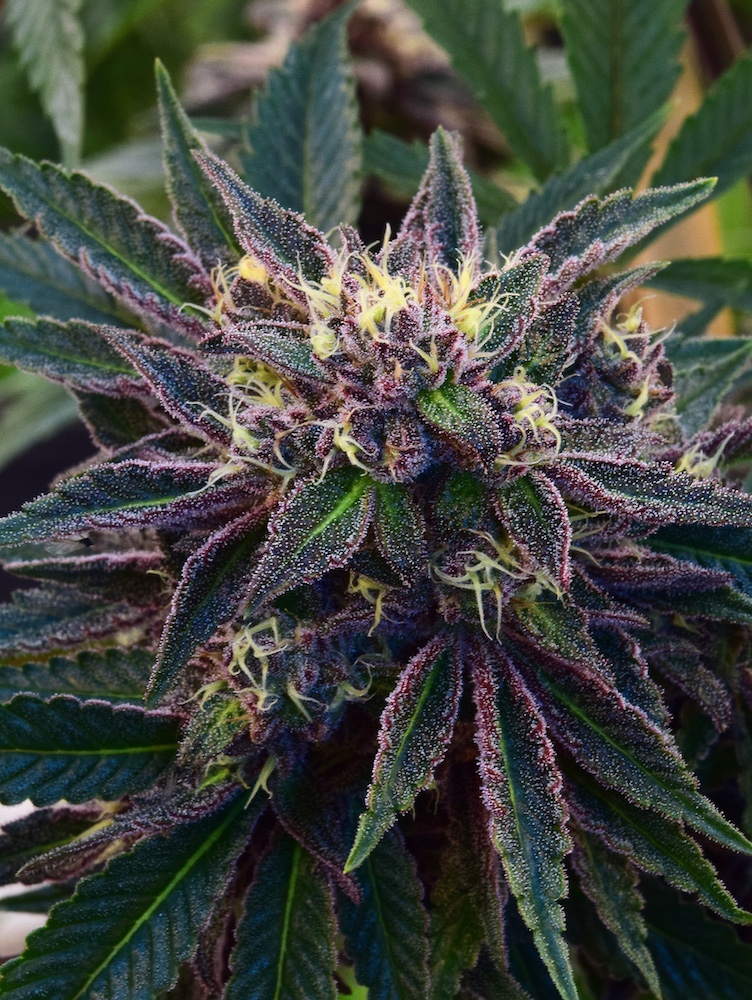
This Sativa leaning-hybrid is a cross of pungent Lemon Skunk and frosty Cookies and Cream. Tearing into the buds releases sugarcane levels of sweetness while complex bouquets of lemon candy fill the room. Subtle scents of vanilla and cake round out the citrus. There’s a whiff of freshly baked waffle cone and a pleasing hint of herbal lemon verbena on my lips. Unlike other sativas that can get your heart racing, this strain has less body buzz and more cerebral excitement. Lovely as an afternoon mood enhancer, and even better, fewer calories than a slice of lemon space cake.


Available at: Rip City Remedies 3325 SE Division St. Portland, OR 97202  |  Stash Cannabis Company 9952 SW Beaverton Hillsdale Hwy. Beaverton, OR 97005  |  Sweet Relief Tillamook 1906 1st St. Tillamook, OR 97141

The post SUGARY SHOWOFF appeared first on Dope Magazine.


SUGARY SHOWOFF
Source: Dope Magazine

Filed Under: Lemon Meringue, Oregon, Oregon Strain, sativa dominant hybrid, strain review, Strain Reviews

NORTHWEST FOLKLIFE FESTIVAL: Four Days of Amazing Food and Inspirational Art and Music

June 4, 2017 by Staff Writer Leave a Comment

The Northwest Folklife Festival brings together up to 250,000 people in celebration of the diversity of the Pacific Northwest. This year’s Memorial Day weekend was a vibrant display of the communities that make up Washington and a wonderful chance to immerse yourself and engage with those communities. NWFLF is located in Seattle Center and shares this space with Festál, which celebrated 20 years this year!

Festál started with the mission of making the center of Seattle a place to “celebrate who we are as Seattleites, and also a way to learn about our neighbors and to learn from our neighbors.” Cultural equity is of utmost importance to Festál. Not wanting programming based on diversity to become “tokenized,” Festál requires “the participation and guidance of the community itself… putting each event together of and for their own community.”

With this shared space and distinction in the mission and purpose, NWFLF and Festál have once again created an inclusive environment for learning, sharing, thoughtful engagement and celebration of arts and cultures from all around the world that reside right here in Washington.

Although there were more than 5,000 performers, the draw for many foodies was the spread of savory, sweet, spicy and overall spectacular food vendors that grace the festival each year. Your taste buds can take a tour of Belizean food made from scratch, Caribbean Cuisine, authentic northeast African Coastal cuisine from the Horn of Africa, Lebanese Cuisine at Lajitana, Polish cuisine at Taste of Poland and so many more! One attendee explained how she loved all that NWFLF had to offer but could spend all day just trying all of the culturally distinct food available. Good thing the festival is four days long!

There is so much to taste, see and do it’s easy to see how someone could get easily roped into just one aspect of the festival, including the smallest of attendees. The Discovery Zone is full of performances and activities sure to spark those happy laughs, creative cognition and mature reception of everything that kids are exposed to over the weekend. With Creative Kidz Bollywood performances, children’s flamenco dances and so much more all across the festival, everyone young in age and spirit was smiling ear to elephant ear.

However, this year the festival’s future is on the line. The festival has always been put on free of charge to the public so to “remove any economic barriers and ensure that everyone can experience and share in cultural traditions,” but this year attendees were asked to support the festival with donations at the entrance in an attempt at raising $350,000 so that the cyclical nature of learning, growing and accepting the beauty of the unknown could continue for years to come. NWFLF is a staple not only to Seattle but to the Pacific Northwest. People travel from all over to perform and attend one or all four days of freedom of expression and cultural acceptance that is proudly showcased in Seattle Center and now it is time to give back.

https://www.youtube.com/watch?v=iOOGlH4zaF8

After all these years of attendance and admiration, DONATE to a festival that has inadvertently combated aggressive bigotry and repressive ignorance for decades through exposure to culturally equitable engagement. Being able to see groups like Batucada Yemanja with their Brazilian Samba and Choro, music and dance celebrations of indigenous tribes and local staples like the Massive Monkees with their Hip Hop flavor is exactly what we need in a time of such polarity.

Become a friend of Folklife so that we can all enjoy what NWFLF has to offer for decades to come.

The post NORTHWEST FOLKLIFE FESTIVAL: Four Days of Amazing Food and Inspirational Art and Music appeared first on Dope Magazine.


NORTHWEST FOLKLIFE FESTIVAL: Four Days of Amazing Food and Inspirational Art and Music
Source: Dope Magazine
Filed Under: Acceptance, Beauty, Culture, Donate, Lifestyle, News, Northwest Folk Life Festival, NWFLF, seattle, Washington

SKYWALKER SYRINGE OIL

June 4, 2017 by Staff Writer Leave a Comment

A calm, focused, heady transition—this concentrate will give you a full body high. For seasoned concentrate connoisseurs only.

This well balanced, indica-dominant hybrid is a cross between Blueberry and Mazar Sharif, creating a stellar concentrate that had me feeling one with The Force, and kept the Dark Side at bay.

Light pierced the clear amber oil as it dripped into my rig and vaporized. I am instantly transported light years away to a galaxy of euphoria, flavors of orange blossom and fresh lime juice filling my mouth. My tongue dances with lingering notes of sweet, creamy butter as I exhale a planet-sized plume.

Moments later, a smile blasts across my face and my eyes can barely open. My body melts into the soft cushions of the couch. Relaxation envelopes me, my back pain fades like a distant and dying star, only to be replaced with a calm, focused sense of self. The effects grew heavier over the next several hours, crushing down on me like the vastness of space, until I succumbed to a deep and restful sleep.

Waking the next morning, I feel completely rejuvenated, “… like I could take on the whole empire myself.” Saturated with positive effects, Skywalker is appropriately titled and will continue to be one of my favorite phenotypes.

Effects:

-Instant, well-balanced high

-Pain relief

-Deep, restful sleep


Producer: HYH Society – www.hyhsociety.com  |  Instagram: @hyhsociety

Available at: KIND MEDS 2152 S VINEYARD #120, MESA, AZ 85210  |  MONARCH WELLNESS CENTER 8729 E MANZANITA DR, SCOTTSDALE, AZ 85258  |  FARM FRESH 790 N LAKE HAVASU AVE, LAKE HAVASU CITY, AZ 86403

The post SKYWALKER SYRINGE OIL appeared first on Dope Magazine.


SKYWALKER SYRINGE OIL
Source: Dope Magazine

Filed Under: Arizona Concentrate, Arizona News, Concentrate Reviews, HYH, Skywalker OG, Syringe Oil

How America is Celebrating Hemp History Week

June 4, 2017 by Staff Writer Leave a Comment

how-america-is-celebrating-hemp-history-week

The second week of June marks the eighth annual Hemp History Week, and hemp advocates are putting on educational events across America to demystify the multi-tasking plant.

Going into Hemp History Week, the number one (and two) hemp fact to know is: While it’s a cousin of cannabis, the hemp plant is unique in that it can provide the therapeutic benefits of cannabidiol (CBD) with only trace amounts of the psychoactive compound tetrahydrocannabinol (THC). Hemp also has limitless industrial possibilities.

For decades, America has had a checkered past with hemp. The once-thriving crop was banned in the 1930’s, then encouraged for the war effort throughout World War II, only to be banned again in the 1970’s. More recently, there’s been progress as the crop can be cultivated under certain circumstances and on a state-by-state basis.

Hemp History Week

Hemp History Week is the largest national grassroots effort to restore support for industrial hemp farming in America. The many events taking place June 5th through June 11th will include retail promotions, hemp plantings (in the states where hemp farming is legal under Section 7606 of the U.S. Farm Bill), documentary screenings, as well as farmer outreach.

Did you know that the hemp you see in national grocery stores like Whole Foods are actually imported from Canada, Europe, and China? It’s a controversial issue for domestic farmers as they fight for the right to grow and profit off American grown hemp.

According to the campaign website, “Hemp not only nets up to 2.5-times the value of U.S. corn and soy, it also has wide-reach environmental benefits including soil remediation, prolific pollen production for our bees and beneficial insects, and no synthetic pesticides nor fertilizers necessary to grow.” While some states continue to fight for hemp farming, progress is being made in states like Kentucky, Vermont and Colorado.

In 2014, these three states became the first to grow hemp under Section 7606, Legitimacy of Industrial Hemp Research, of the 2014 Federal Farm Bill. Now, hemp farming has reached many more states including: California, Colorado, Hawaii, Indiana, Kentucky, Maine, Minnesota, Nebraska, Nevada, New York, North Dakota, Oregon, Tennessee, Virginia, and West Virginia.

The objectives for Hemp History Week:

  • Celebrate America’s rich history with industrial hemp before it was outlawed and educate the public about the barriers to hemp farming in the United States.
  • Advocate for a federal policy change while sending a strong, positive message to the Executive Branch and Congress to remove barriers to hemp farming and let farmers grow the versatile and profitable crop.
  • Engage consumers by showcasing the range of hemp products available and the nutritional as well as environmental benefits that they provide.

“As recognition of hemp’s excellent nutritional profile grows, along with the demand for regenerative agricultural practices and advancements in plant-based innovations, hemp stands to once again be a vital and viable crop in the United States and around the world,” the Hemp History Week organization said in a statement.

Take action

A national nonprofit advocacy group, Vote Hemp was founded in 2000 with the mission to remove legal barriers to American industrial hemp farming. Vote Hemp estimates that the hemp market in the U.S. achieved 25% growth in 2016, reaching a total market value of $688 million.

This year, the focus is on garnering support from constituents across the country to ask their Senators to support the Senate version of the Industrial Hemp Farming Act. According to Vote Hemp, “the Bill Amends the Controlled Substances Act to exclude industrial hemp from the definition of “marihuana.” Writing to your senator is only few clicks away with this letter writing tool on their website.

This year’s theme for Hemp History Week is Breaking Ground, which focuses on how regenerative hemp farming, hemp foods, and other hemp products provide sustainability solutions for the next generation. Below are a few hemp-centric events from across the nation. You can also visit the campaign website to search for a nearby event.

Grateful Hearts Unite for Hemp: Boulder, Colorado

The Industrial Hemp Research Foundation (IHRF) has organized an event on June 9th to celebrate and educate people about the history of hemp. From 2:30 – 5:00 Café Aion will host the Grateful Hearts Unite for Hemp, a pre-party fundraising celebration while the Dead & Company is in town for a concert at Boulder’s Folsom Field.

“It’s a great opportunity for the Earth conscience followers of the band to learn more about hemp,” explains Melanie Rose Rodgers, Community Engagement Director for IHRF. The event and fundraiser will highlight the Industrial Hemp Research Foundation, a local 501c3 nonprofit dedicated to supporting industrial hemp research programs at institutions of higher learning and education in Colorado and universities across America.

Attendees are encouraged to wear all the hemp clothes and accessories they own. The ticketed event includes giveaways from hemp sponsors, food, drinks, and music from the band Pistols and Petticoats. 

A note from the organizer: “Cafe Aion is conveniently located 0.2 miles (7 min. walk) to the Dead & Co. concert venue, Folsom Field. We welcome the music community, Dead fans, and fellow hempsters for this unique, community event celebrating Hemp History Week!”

Get HIP on HEMP: Washington, D.C.

If you’re in the District and want to learn more about hemp, there’s an educational event at WeWork’s K Street location on June 8. The Hemp History Week event is organized by the local hemp business Get Hemp Butter, an all-natural beauty and wellness salve company. Consult DC and High Caliber Events are also hosting.

Featured speakers include: Lauren Stansbury, Media Relations Manager of Dr. Bronner’s; DC Scroger, local Cultivator and Host of DC’s first Grow Show; and Suzannah L. Simmons, Director of Operations & Outreach for Cogent Law Group. Tickets are free and available online.

Harborside Health Center: Oakland, California

The legendary cannabis dispensary will be celebrating Hemp History week with interactive industrial hemp exhibit displays of building materials, plastics, fabrics, fibers, and clothing. There will also be free samples of hemp seeds and body care products. Proceeds from the purchase of posters, CD’s of John Trudell, and the DVD Bringing It Home will go to the organization Hempstead Project HEART (Hemp Energies Alternative Technologies). The event is on June 11th from 1:00PM to 4:00PM.

Harborside’s Co-Founder and Executive Director, Steve DeAngelo, is well-known in the cannabis and hemp space. A lifelong cannabis activist and businessman, DeAngelo has positioned himself as one of the most respected experts in the industry.

He literally wrote the book on the plant, called The Cannabis Manifesto, and is credited with creating the model medical cannabis dispensary with Harborside. According to his dispensary website, “he sees hemp and cannabis as one issue, not two.” DeAngelo is also the Co-founder and CEO of Ecolution, an international manufacturer of hemp clothing and accessories.

Search for Hemp History Week events near you with this handy search tool from the campaign website.


How America is Celebrating Hemp History Week
Source: Marijuana Times

Filed Under: Culture, Featured, hemp, industrial hemp

  • « Previous Page
  • Page 1
  • …
  • Page 12
  • Page 13
  • Page 14
  • Page 15
  • Next Page »

Primary Sidebar

Listing Categories

  • Agriculture
    • -Growing Guides
    • -Hydroponics
      • --Schools
  • Arts and Recreation
  • Education
  • Employment
  • Finance and Investments
  • Health and Medicinal
  • Legal
  • News, Magazines, Blogs
  • Shops

Recent News

Rebel Cannabis Celebrity Ed “NJWeedman” Forchion Calls Instagram His Biggest Foe Since the DEA

Best Weed Grinders for 2022

Quebec May Require Proof of Vaccine for Cannabis, Liquor Store Customers

Recreational Cannabis in Montana Brings in $1.5M

Copyright © 2026 · 420 Department