• Skip to content
  • Skip to primary sidebar

420 Department

Over four hundred and twenty things

  • Home
  • Add Listing
  • Contact

cannabis legalization

Senator Diane Savino on New York’s Cannabis Prospects in 2019

February 3, 2019 by Staff Writer

sen-diane-savino-on-NYs-cannabis-prospects-in-2019

New York State Senator Diane Savino is one of the earliest lawmakers in the state to champion cannabis reform. Senator Savino carried the state’s medical cannabis bill after her predecessor, Thomas K. Duane, did not seek re-election in 2012.

Savino recalled how Duane, the state’s first openly gay member of the Senate – who was also the only openly HIV-positive member – pushed for the bill in honor of those self-medicating to treat their HIV symptoms. “Anyone who’s ever seen anyone suffer from either the effects of cancer or chemotherapy or just chronic pain, you realize the limitations to what modern medicine can provide,” the Senator said. She went on to say, “…why would we stand in the way of people finding treatments that they could live with? So, [supporting the measure] was a no-brainer for me.”

After re-writing the bill to reflect the current climate, Savino was pivotal in passing legislation, which was signed in 2014. Today, the state appears poised to become one of the latest to legalize a recreational cannabis market. However, Senator Savino isn’t so sure it’s a done deal. That said, progress concerning New York’s cannabis access has been rapid in recent years.

In its earlier stages, New York’s medical cannabis program was considered one of the more restrictive in the country. Today, however, it is one of the more progressive markets, which includes becoming one of the first states to allow people with opioid-prescriptions to qualify for a medical marijuana ID.

Getting to this stage was not easy, according to Savino, and she cited Governor Andrew Cuomo’s reluctant support for cannabis. As recently as 2017, he had been calling marijuana a gateway drug. However, Savino noted that Cuomo saw the writing on the wall between public demand and sales revenue. A great deal of back and forth during the 2014 legislative session resulted in a bill which had proponents agreeing to restricted sizes and lengths of the program, as well as limited qualifying conditions and a ban on smokable flower.

Pro-medical supporters did earn clear dates to the program during negotiations. Doing so helped New York open its first dispensary within the quoted time – a feat several states failed to achieve. From there, she said the state began to see the concerns of supporters. The results were limited access for patients and practitioners, while businesses could not operate and left the market.

Since then, the state has opened its access for easier practitioner enrollment, which has allowed for more efficient patient enrollment under expanded qualifying conditions. By Q2 of 2018, 1,718 practitioners had been registered – up from 1,098 the year before, according to a state DOH report. Meanwhile, New York has certified 98,101 patients, adding 23,637 people during that period.

Still, the Senator sees gaps in the program. The biggest, according to Savino, has been doctors. State medical societies, like the Medical Society of the State of New York (MSSNY), consider legalized cannabis a public health concern. In a statement, Dr. Thomas Madejski, President of the MSSNY, agreed that there are medical purposes for cannabis. However, Dr. Madejski added, “Physicians are very concerned that marijuana is an addictive drug that can have significant adverse public health impact if it were to be legalized for non-medicinal purposes.”

While doctors are a problem, according to Savino, nurse practitioners seem more open to medical cannabis. “Nurses just tend to be a little bit more progressive than doctors,” she stated.

When asked if lawmakers are actually supportive of cannabis reform or just going along with the wills of constituents, Savino was unsure. Her uncertainty extended to the legislation itself. “I’m not absolutely certain that we have the votes to pass this yet.” Savino cited potential sticking points for lawmakers. Key points centered on the expansion of the adult-use market as well as issues surrounding traffic, youth access and lingering concerns that cannabis is a gateway drug.

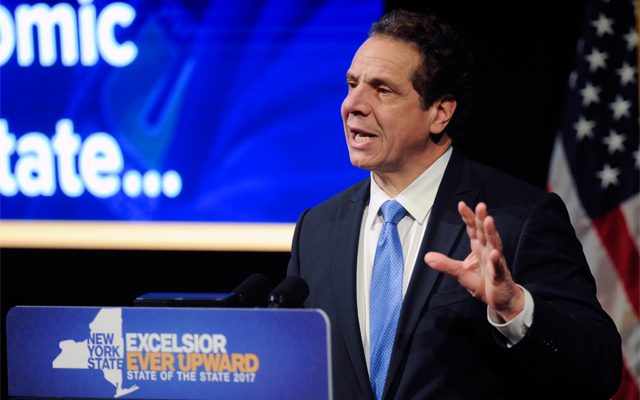
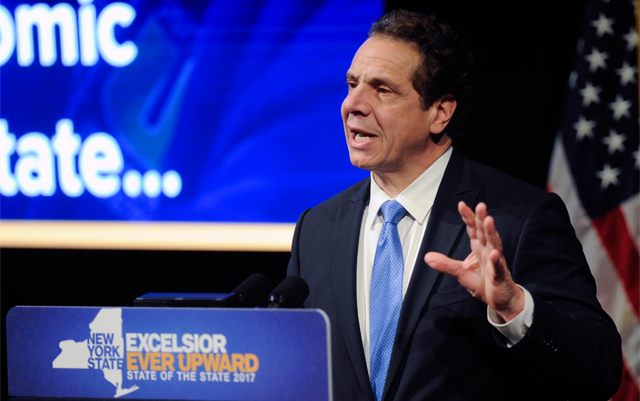
While Savino may have concerns, Governor Cuomo made legalization seem as if it is right around the corner. During his recent State of the State address, the Governor called for recreational reform in the first 100 days of 2019. When asked if this will come to fruition, Savino wasn’t sure of the Governor’s timeline. She stated that “[Cuomo]’s hard to predict whether he thinks something is good or whether he’s just throwing it out there.” She added, “I think he assumed that we can get it done.”

At this time, Senator Savino sees legislation at a different phase. “I think right now people are in that phase that well maybe it doesn’t have to happen in the budget or it’s just not quite there yet. But we’ll know soon.”

Savino doubts that the bill will pass in its current form. One concern could be the Governor’s newly proposed Office of Cannabis Management, which would oversee the market. According to the Senator, its Executive Director would have “an extraordinary amount of power over this program”. This is an aspect of the program she does not see making the final bill. “I sincerely doubt that will remain the case. We’re not gonna give somebody so much power over a public health program, an adult-use program, tax policy and the administration of regulation of something as important as this without having some legislative oversight.”

Other significant concerns could upend the proposed bill’s progress. They include a provision which would allow counties and cities with less than 100,00 citizens to opt out of the program. Savino said that this rule would apply to “basically every county and every city in the state of New York with the exception of Buffalo and New York City.” While Savino supports towns, villages and possibly small cities opting out, some sparse upstate counties not participating could create massive cannabis deserts in New York.

Meanwhile, concerns over taxes and a lack of dispensaries could create additional headaches for the measure. However, Savino believes that the matter is moving in the right direction. This includes inclusive ownership points laid out by Governor Cuomo in his 2019 agenda. Programs and stipulations aimed at prioritizing minorities, women and disadvantaged farmers are currently in Cuomo’s proposal. These measures are likely to include licensing priority and an incubative program. However, no key data points were available at this time to demonstrate the initiative’s goals concerning market share.

As New York State moves towards likely legalization of its adult-use market, Savino sees progress with other significant steps that need sorted. This includes amendments of the state’s penal code concerning marijuana decriminalization. Additionally, the state must send a clear message to offenders that black market activities will be penalized.

With cannabis such a wide-spanning subject, State Senator Savino expects the topic to come up during a series of budget hearings this month. Soon enough, we could have a clearer idea as to when, or if, New York legalizes adult-use cannabis.


Senator Diane Savino on New York’s Cannabis Prospects in 2019
Source: Marijuana Times

Filed Under: cannabis legalization, Featured, New York, Politics

The Battle Over Marijuana Legalization in Minnesota

February 2, 2019 by Staff Writer

the-battle-over-marijuana-legalization-in-minnesota

Earlier this week I wrote about the launch of the campaign to legalize cannabis for adult use in Minnesota. Since Minnesota is one of about two dozen states that doesn’t allow citizens to bring issues to voters via ballot, activists must focus on the Minnesota state legislature.

Minnesota voters have developed a bit of a reputation for being unpredictable at times; Minnesota was the only state in the win column for Democratic Presidential candidate Walter Mondale in 1984 (to be fair, it was his home state) and they made Jesse Ventura their 38th governor in 1998.

Whether or not these quirks will translate into state legislators approving marijuana legalization remains to be seen. After all, supporting cannabis law reform is not exactly a “maverick” position to have anymore. This is all the more reason to believe activists in Minnesota have a great shot at bringing real reform to their state this year.

Working toward that end is the pro-legalization group Minnesotans for Responsible Marijuana Regulation (MRMR). Described on their website as “a broad coalition of Minnesota organizations and individuals supporting and advocating for the legalization and regulation of marijuana in Minnesota for adult recreational use”, MRMR boasts a support roster that includes the Mayor of Minneapolis.

And MRMR hopes to educate state legislators and their constituents about why legalization is the best path to take. “We started Minnesotans for Responsible Marijuana Regulation because we believe now is the time to have substantive, collaborative, inclusive conversations that help shape what marijuana legalization and policy look like in Minnesota,” Laura Monn Ginsburg, the MRMR Campaign Co-Manager, told The Marijuana Times. “To that end, we decided to launch the campaign with a Steering Committee made of a diverse group of individuals that can work toward thoughtful, thorough, and equitable ways marijuana could be legalized and regulated in Minnesota. We intend to take the conversation well beyond the Capitol, and head out throughout the state to engage and listen.”

Laura told us that although a lack of ballot access is a challenge, legalization has several things going for it. “There are a number of things that work greatly to our advantage here in Minnesota: we have legalized medicinal marijuana, we have the experience of other states to draw from, we have two marijuana legalization parties that reached the threshold for major political party status, and we have a Governor and many other elected officials who openly support legalization and did so when they were campaigning,” she said.

Laura told us that MRMR wants “marijuana legalization in Minnesota to promote economic opportunity and public safety in every community and to redress the disproportionate adverse impacts that marijuana prohibition has had on our residents and communities of color. That’s going to require tough work engaging with many stakeholder groups, but that’s precisely the work we established MRMR to do.”

So far, Laura told us that the feedback in the state has been overwhelmingly positive, even though there are still some who are not ready to engage in a discussion about legalization. Sadly, those people will be left behind, on the wrong side of an issue that’s time has clearly come.

If you live in Minnesota and support adult-use legalization, the time to make your voice heard has come as well.


The Battle Over Marijuana Legalization in Minnesota
Source: Marijuana Times

Filed Under: adult use, cannabis legalization, Featured, Legislative, minnesota, recreational cannabis

California Highway Patrol Arrests Licensed Cannabis Delivery Drivers

January 22, 2019 by Staff Writer Leave a Comment

california-highway-patrol-arrests-licensed-cannabis-delivery-drivers

While one of the goals of legalizing cannabis is to drastically reduce the number of people arrested for possession of the plant, it unfortunately can’t put an end to all arrests. Though there are still crimes related to marijuana, especially illegal sales and transportation, not all arrests fall into perfect black and white categories, as is the case with two former California Highway Patrol (CHP) officers who were arrested after a traffic stop by current CHP.

“It appears the CHP will stop at nothing to disrupt the lawful and legal transport of items involved in the medicinal cannabis industry,” Barry and Clemann said in a press release.

Rich Barry and Brian Clemann – the former CHP officers – now own Wild Rivers Transport, which is a licensed cannabis transport business. At the time of the arrest they weren’t transporting cannabis, but were simply collecting a payment for cannabis oil when they were stopped. A police canine detected cannabis and the vehicle was searched.  

After identifying themselves as prior CHP officers the pair found themselves being arrested for suspicion of illegal possession of concealed firearms and possession of more than $100,000 derived from the unlawful sale, possession for sale, transportation or manufacturing of a controlled substance.

CHP spokeswoman Jaime Coffee said in an email interview that “in order to legally transport cannabis in California for commercial purposes, a person must possess the appropriate (Bureau of Cannabis Control) license and comply with the BCC administrative regulations.”

What this means is that Barry and Clemann did nothing illegal, since they are a licensed distribution business and they have said that they carried their license from the Bureau of Cannabis Control.

This arrest appears to have no basis. The only issue appears to stem from the fact that the CHP officers seem to have mistaken their identification as “prior” officers and instead heard “retired” officers, according to a press release where they were accused of calling themselves retired police officers. However, even at that, the arrests are for cannabis-related crimes that they were not even committing as they are a licensed business.

Kumin, the attorney representing Barry and Clemann, said in an email interview that “the fundamental issue here is whether the CHP is going to follow the will of the voters of California and the Legislature and stop cooperating with federal authorities in the ongoing federally instigated war on cannabis.”

The pair are suing the California Highway Patrol in San Francisco Superior Court, where they are hoping for a ruling that directs state and local governments not to interfere with the legal distribution of marijuana.


California Highway Patrol Arrests Licensed Cannabis Delivery Drivers
Source: Marijuana Times

Filed Under: California, Cannabis Arrests, cannabis legalization, Featured, Legislative

How Long Should Legalization Take?

January 21, 2019 by Staff Writer Leave a Comment

how-long-should-legalization-take

Despite what you may think of when reading the title of this piece, I’m not talking about “legalization” as an abstract policy concept; I’m talking about the proposing, voting on and implementation of cannabis legalization in a specific state.

We’ll use New York as an example. By all accounts, the state of New York is on the precipice of approving recreational marijuana legalization. If all goes well, the legislature will pass a legalization bill and the Governor will sign it, kicking off a series of deadlines and meetings leading up to implementation.

But it’s not that simple. From The Associated Press:

While there’s broad agreement on the idea of legalization, there’s no consensus on a long list of details that must be figured out first.

Taxes and regulations must be approved. Rules for licensing retailers must be written. A new government entity may have to be created. Local governments will have to be brought in. Even after a bill passes, it could take a year or more for any pot shops to open, based on what’s happened in other states and New York’s own experience with medical marijuana.

It seems like a forgone conclusion that it takes a couple of years to pass and enact a legalization measure. It seems much of this delay comes from the still deep-seated belief held by many that cannabis is a dangerous substance that needs to be tightly restricted and heavily regulated, lest it get loose and destroy the very fabric of our society.

Things learned early are hard to forget. I remember D.A.R.E. I remember being pummeled verbally for a few years about how marijuana use leads to all manner of degeneracy and health problems. The remnants of the stigma around cannabis cause many to believe that legalization should be a few hundred pages of regulations covering every possible aspect of a theoretical industry; something that contains a clause for every contingency.

But what if it’s not? What if a state government just outlines what needs to happen, lets an industry develop, then reacts accordingly?

Yes, I know, that will lead to a “wild wild west” (an over-used phrase if ever there was one) of marijuana. Adults will be buying marijuana willy-nilly all over the place. And my question is: so what?

California was the “wild wild west” of marijuana for 20 years, and what happened? A lot of people grew, sold and consumed marijuana legally. That’s it. No one overdosed and died from marijuana. Millions of patients had better lives because they had easier access to their medicine. Yes, the horror…the horror.

It’s not like a simpler approach isn’t possible with cannabis law reform. Look at Oklahoma. I’ve covered the state quite a bit on our video show Cannabis News and things are moving quite fast there. After what most would deem a rocky start, the medical marijuana program in Oklahoma has gone from non-existent to in place and showing explosive growth in the space of 6 months. And what will happen in Oklahoma? A lot of people will grow, sell and consume cannabis legally. Tens of thousands of patients will find relief.

The horror.


How Long Should Legalization Take?
Source: Marijuana Times

Filed Under: cannabis legalization, Featured, Legislative

Cuomo Unveils Cannabis Legalization Plan for New York State

January 17, 2019 by Staff Writer Leave a Comment

cuomo-unveils-cannabis-legalization-plan-for-NY-state

New York Governor Andrew Cuomo’s long pivot towards cannabis legalization came to a head at the close of 2018. In mid-December, the Governor who once considered cannabis a gateway drug announced his emphasis on legalizing adult-use cannabis in the state. Cuomo went so far as to call on lawmakers to legalize marijuana within a busy first 100 days of the Governor’s third term in office.

Well over 60% of New Yorkers support legalization for scores of reasons. For Governor Cuomo, the reason is mainly driven by criminal justice reform. The move would be part of a proposed justice agenda that also focuses on stronger gun control laws.

Since the announcement, New Yorkers have waited to learn more about the proposed cannabis plan. On Tuesday, January 15th, the Governor released additional information about his administration’s plans during his State of the State address. The excitement was clearly felt right at the top when the Governor opened by proclaiming that 2019 was going to be a great year.

Cuomo’s plan centers on an environmental plan referred to as the Green New Deal. This is not to be confused with Rep. Alexandria Ocasio-Cortez’s Green New Deal. Though, both plans do have overlap when it comes to environmental.  

The Governor’s plan to legalize adult-use cannabis hopes to come within the first 100 days of the year. However, a jam-packed agenda consisting of, but not limited to, women’s equal rights, criminal justice reform, broadband internet for all and election reform could bog down the efforts.

“Stop the disproportionate impact on communities of color,” the Governor emphatically said while highlighting the plan. He added, “And let’s create an industry that empowers the poor communities that paid the price and not the rich corporations who come in to make a profit.”

About an hour into the address, the Governor would elaborate on his adult-use program plans. Citing the findings of reviews the Governor launched last year, Cuomo called for a regulated market for adults 21 and over. Once again, an emphasis was placed on empowering poor communities instead of rich entities. Cuomo called this “an economic opportunity.”

Cuomo went on to touch on a few key topics of the plan. Highlighting the list was once again criminal justice reform. With legalization, communities of color should feel less of an impact concerning criminalization; which currently affects these communities at rates of 8:1 to white communities despite similar usage rates. The plan also aims to correct some past wrongs in the justice system by automatically sealing certain cannabis arrest records.

The plan also believes that it will provide quality control to a market that can only regulate medical cannabis consumption under the current laws. It was also announced that counties and large cities could opt out of the program. This option has not sat well with some State Senators. In a tweet, Julia Salazar, representing the state’s 18th District, called the option unacceptable.

A marijuana legalization proposal that allows counties & large cities to “opt-out” of the regulations that would empower directly impacted communities is unacceptable.

New Yorkers have been enormously harmed by criminalization. Alleviating that harm must be our top priority.

— Julia Salazar (@JuliaCarmel__) January 15, 2019

Closing out this portion of the address, Governor Cuomo projected the state would earn $300 million in tax revenue, though no timeline was specified. The plan should also create “good union jobs that we need”, according to Cuomo, though no numbers were projected during the address.

Watch the full State of the State address below:

Some had hoped that Cuomo would use the address to speak more to specifics related to the program. That said, a packed agenda left the Governor little time to go in-depth on most topics during the nearly hour and a half speech. However, more details were made available in the Governor’s fiscal year 2020 executive budget financial plan.

Provisions include the enactment of the Cannabis Regulation and Taxation Act which would tax $1 per dry weight gram of flower cultivated and $.25 per dry weight gram of trim. A second 20% tax would be imposed on a wholesalers invoice to retail dispensaries. Wholesalers also face a 2% tax on the same sale “but collected in trust for and on account of the county in which the retail dispensary is located.”

Ryan Lepore, a Business Operations Specialist for the telemedicine company PrestoDoctor thought that “Cuomo was very vague in his approach to unveiling the program – though the summary was on the correct track.” He added, “The devil is in the details with any new program or system, especially with something as complicated as an adult-use cannabis program.”

The prospects for legalization appear to be in the state’s favor. With Massachusetts already luring New Yorkers across the border for legal cannabis, the pressure is on. With the impending legalization in New Jersey, New York lawmakers understand that a significant sum of money will be lost as long as the state is bookended by neighboring legal states.

Speaking of state lawmakers, legalization hopes received a significant boost when the 2019 session of Congress began. For the first time since 2010, Democrats gained full control of the state government. This should all but ensure that New York’s agenda for cannabis and several other subjects remains progressive until, at the very least, the next elections are held.

Governor Cuomo’s insistence on cannabis reform is a stark contrast from the Governor of just a year or two ago. However, the change has cannabis near the top of the list of priorities during his third term as Governor. Passing the law within the first 100 days could be difficult with a large sum of high-priority legislation on deck. That said, cannabis legislation means criminal justice reform and additional income for the state. It is likely that the multiple benefits associated won’t be lost on Cuomo or other state lawmakers. Only time will tell if this comes to fruition in the first 100 days or in 2019 at all.


Cuomo Unveils Cannabis Legalization Plan for New York State
Source: Marijuana Times

Filed Under: cannabis legalization, Featured, Legislative, New York

Vermont Supreme Court Says The Scent of Marijuana is Not Grounds for Search and Seizure

January 10, 2019 by Staff Writer Leave a Comment

vermont-supreme-court-says-smelling-marijuana-is-not-grounds-for-search-and-seizure

It’s a known fact to those pushing for cannabis legalization that there are a number of problems when it comes to how the criminalization of cannabis has been enforced. All around the country people are arrested daily for cannabis possession, with a large majority of those people being minorities. This is one of the biggest reasons that so many individual municipalities have moved towards decriminalization to help end the unnecessary arrests.

After two years, the Vermont Supreme Court reached a unanimous decision that could drastically reduce the number of people arrested on cannabis possession – the smell of marijuana is not grounds for search and seizure.

“Police have had enormous discretion to stop and search motorists, including for erroneous or pretextual reasons and on the basis of implicit or explicit bias,” said Lia Ernst, the ACLU attorney who argued the case. “In ruling that police can be liable for such acts, this decision sends a clear message — no one is above the law, and if police make bad stops, they can and will be held accountable.”

This comes after Gregory Zullo was pulled over because snow was covering the registration sticker on his license plate – which is not a traffic violation. His vehicle was then seized by State Trooper Lewis Hatch, who justified the search and seizure by claiming to have smelled marijuana. In Vermont, neither the license plate issue nor the marijuana are illegal – so Zullo sued and the court ruled in his favor.

The National Association of Criminal Defense Lawyers (NACDL), which submitted a joint amicus brief in 2018 in support of Zullo, lauded the decision: “All people in this country should be able to trust that law enforcement is not targeting them for any improper purpose. And now the Vermont Supreme Court has held that the people of Vermont have a path to vindicate their rights should they be so violated.”

Originally, the state court had dismissed the lawsuit, claiming the officer was immune from being sued. However, the state high court reinstated the case, deciding that officers could be sued for discriminatory searches and seizures in violation of the Vermont Constitution.

In a time when cannabis is becoming legal for recreational use in more and more states – including Vermont – it makes sense that the scent of marijuana, especially a faint scent, should not be enough to warrant a search. In many cities and states, marijuana is now only a ticketed offense, with the intention of reducing the number of arrests and hours wasted due to criminalization.


Vermont Supreme Court Says The Scent of Marijuana is Not Grounds for Search and Seizure
Source: Marijuana Times

Filed Under: cannabis legalization, Featured, Legislative, Vermont

What Netflix’s “Murder Mountain” Teaches Us About Prohibition

January 5, 2019 by Staff Writer Leave a Comment

what-netflixs-murder-mountain-teaches-us-about-prohibition

By now many of you have likely heard about the interest in a new docuseries from Netflix called Murder Mountain. The mountain in question is in Humboldt County, California, a hub of illegal cannabis growing for decades.

The series weaves together several different plotlines, including the story of a man from the San Diego area who went missing while working on Murder Mountain and the affect adult use legalization is having on growers in the area.

Over the course of the six-part series, several things become glaringly obvious. The most over-riding takeaway from the series is how cannabis prohibition created an area of lawlessness in the northern part of the largest state in the U.S.

Humboldt County’s rural nature and rough terrain were a natural lure for criminal elements looking to take advantage of the prohibition-inflated profits that came with marijuana growing. Over time these more violent elements drove out the hippie culture that northern CA was known for. Growers in the area, not wanting law enforcement anywhere near their operations, did their best to seal themselves off and deal with problems in their own way.

Under prohibition the area became a magnet for criminal gangs looking for a place to hide and grow lucrative cannabis. As mentioned in the series, some estimate that 60% of the black market marijuana grown in the U.S. at one point came from the Emerald Triangle – Humboldt, Mendocino, and Trinity counties in northern California.

Whether or not that number is true – or could ever even be accurately determined – is less important than the fact that its very plausibility speaks to the amount of cannabis coming out of the region.

Another big takeaway from the series is just how damaging the over-regulation of California’s new legal cannabis industry is to growers and would-be legal business owners in the state. Massive fees, high taxes and numerous regulations have caused many to have to make a choice between continuing in the black market or risking everything for the possibility of keeping their head above water in the legal market.

What would Humboldt County have been without marijuana prohibition? Would “Murder Mountain” have that name in a world where cannabis was never made illegal in the first place? One thing is for sure: without marijuana prohibition, there is no reason for the Emerald Triangle to be flooded with criminal gangs and those who are more likely to settle their disputes with firearms than they are to settle them in a court. The vast mountainous wilderness would always draw in people who are looking to hide or get away or start over their life in a quiet place, but there is little reason to think that swarms of violent elements would have populated the area without the lure of prohibition-driven cannabis profits.

Of course, hostility and a lack of trust between citizens and law enforcement is not new – and certainly not exclusive to the Emerald Triangle. Much of that distrust can be traced to the War on Drugs however, no matter what the locale.

It’s also true that bad things happen all across the United States and the world every day, things that have nothing to do with prohibition. But creating an artificial incentive for violent people to settle in one geographic region can never end well.

As for the series itself, Murder Mountain is well done overall, and does a fair job of juggling disparate story threads. It keeps you guessing if you don’t already know the stories of the people involved and does a good job of showing a region through the eyes of the people who live there.


What Netflix’s “Murder Mountain” Teaches Us About Prohibition
Source: Marijuana Times

Filed Under: cannabis legalization, Culture, Featured, prohibition

Primary Sidebar

Listing Categories

  • Agriculture
    • -Growing Guides
    • -Hydroponics
      • --Schools
  • Arts and Recreation
  • Education
  • Employment
  • Finance and Investments
  • Health and Medicinal
  • Legal
  • News, Magazines, Blogs
  • Shops

Recent News

Rebel Cannabis Celebrity Ed “NJWeedman” Forchion Calls Instagram His Biggest Foe Since the DEA

Best Weed Grinders for 2022

Quebec May Require Proof of Vaccine for Cannabis, Liquor Store Customers

Recreational Cannabis in Montana Brings in $1.5M

Copyright © 2026 · 420 Department