• Skip to content
  • Skip to primary sidebar

420 Department

Over four hundred and twenty things

  • Home
  • Add Listing
  • Contact

New York

Senator Diane Savino on New York’s Cannabis Prospects in 2019

February 3, 2019 by Staff Writer

sen-diane-savino-on-NYs-cannabis-prospects-in-2019

New York State Senator Diane Savino is one of the earliest lawmakers in the state to champion cannabis reform. Senator Savino carried the state’s medical cannabis bill after her predecessor, Thomas K. Duane, did not seek re-election in 2012.

Savino recalled how Duane, the state’s first openly gay member of the Senate – who was also the only openly HIV-positive member – pushed for the bill in honor of those self-medicating to treat their HIV symptoms. “Anyone who’s ever seen anyone suffer from either the effects of cancer or chemotherapy or just chronic pain, you realize the limitations to what modern medicine can provide,” the Senator said. She went on to say, “…why would we stand in the way of people finding treatments that they could live with? So, [supporting the measure] was a no-brainer for me.”

After re-writing the bill to reflect the current climate, Savino was pivotal in passing legislation, which was signed in 2014. Today, the state appears poised to become one of the latest to legalize a recreational cannabis market. However, Senator Savino isn’t so sure it’s a done deal. That said, progress concerning New York’s cannabis access has been rapid in recent years.

In its earlier stages, New York’s medical cannabis program was considered one of the more restrictive in the country. Today, however, it is one of the more progressive markets, which includes becoming one of the first states to allow people with opioid-prescriptions to qualify for a medical marijuana ID.

Getting to this stage was not easy, according to Savino, and she cited Governor Andrew Cuomo’s reluctant support for cannabis. As recently as 2017, he had been calling marijuana a gateway drug. However, Savino noted that Cuomo saw the writing on the wall between public demand and sales revenue. A great deal of back and forth during the 2014 legislative session resulted in a bill which had proponents agreeing to restricted sizes and lengths of the program, as well as limited qualifying conditions and a ban on smokable flower.

Pro-medical supporters did earn clear dates to the program during negotiations. Doing so helped New York open its first dispensary within the quoted time – a feat several states failed to achieve. From there, she said the state began to see the concerns of supporters. The results were limited access for patients and practitioners, while businesses could not operate and left the market.

Since then, the state has opened its access for easier practitioner enrollment, which has allowed for more efficient patient enrollment under expanded qualifying conditions. By Q2 of 2018, 1,718 practitioners had been registered – up from 1,098 the year before, according to a state DOH report. Meanwhile, New York has certified 98,101 patients, adding 23,637 people during that period.

Still, the Senator sees gaps in the program. The biggest, according to Savino, has been doctors. State medical societies, like the Medical Society of the State of New York (MSSNY), consider legalized cannabis a public health concern. In a statement, Dr. Thomas Madejski, President of the MSSNY, agreed that there are medical purposes for cannabis. However, Dr. Madejski added, “Physicians are very concerned that marijuana is an addictive drug that can have significant adverse public health impact if it were to be legalized for non-medicinal purposes.”

While doctors are a problem, according to Savino, nurse practitioners seem more open to medical cannabis. “Nurses just tend to be a little bit more progressive than doctors,” she stated.

When asked if lawmakers are actually supportive of cannabis reform or just going along with the wills of constituents, Savino was unsure. Her uncertainty extended to the legislation itself. “I’m not absolutely certain that we have the votes to pass this yet.” Savino cited potential sticking points for lawmakers. Key points centered on the expansion of the adult-use market as well as issues surrounding traffic, youth access and lingering concerns that cannabis is a gateway drug.

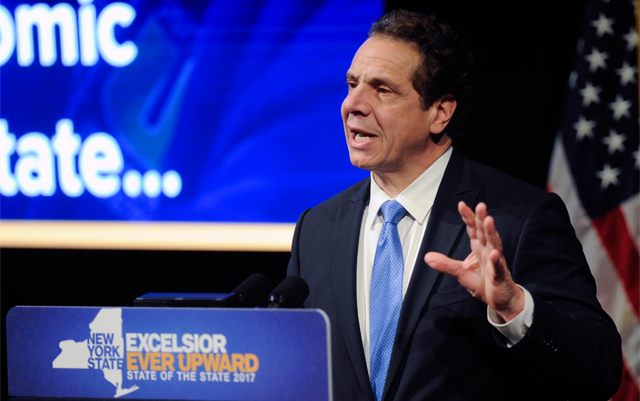
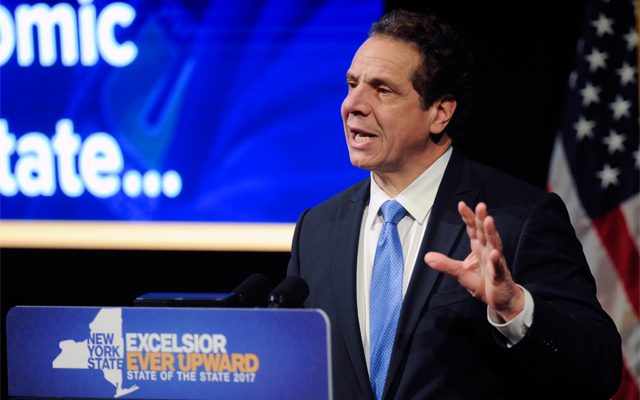
While Savino may have concerns, Governor Cuomo made legalization seem as if it is right around the corner. During his recent State of the State address, the Governor called for recreational reform in the first 100 days of 2019. When asked if this will come to fruition, Savino wasn’t sure of the Governor’s timeline. She stated that “[Cuomo]’s hard to predict whether he thinks something is good or whether he’s just throwing it out there.” She added, “I think he assumed that we can get it done.”

At this time, Senator Savino sees legislation at a different phase. “I think right now people are in that phase that well maybe it doesn’t have to happen in the budget or it’s just not quite there yet. But we’ll know soon.”

Savino doubts that the bill will pass in its current form. One concern could be the Governor’s newly proposed Office of Cannabis Management, which would oversee the market. According to the Senator, its Executive Director would have “an extraordinary amount of power over this program”. This is an aspect of the program she does not see making the final bill. “I sincerely doubt that will remain the case. We’re not gonna give somebody so much power over a public health program, an adult-use program, tax policy and the administration of regulation of something as important as this without having some legislative oversight.”

Other significant concerns could upend the proposed bill’s progress. They include a provision which would allow counties and cities with less than 100,00 citizens to opt out of the program. Savino said that this rule would apply to “basically every county and every city in the state of New York with the exception of Buffalo and New York City.” While Savino supports towns, villages and possibly small cities opting out, some sparse upstate counties not participating could create massive cannabis deserts in New York.

Meanwhile, concerns over taxes and a lack of dispensaries could create additional headaches for the measure. However, Savino believes that the matter is moving in the right direction. This includes inclusive ownership points laid out by Governor Cuomo in his 2019 agenda. Programs and stipulations aimed at prioritizing minorities, women and disadvantaged farmers are currently in Cuomo’s proposal. These measures are likely to include licensing priority and an incubative program. However, no key data points were available at this time to demonstrate the initiative’s goals concerning market share.

As New York State moves towards likely legalization of its adult-use market, Savino sees progress with other significant steps that need sorted. This includes amendments of the state’s penal code concerning marijuana decriminalization. Additionally, the state must send a clear message to offenders that black market activities will be penalized.

With cannabis such a wide-spanning subject, State Senator Savino expects the topic to come up during a series of budget hearings this month. Soon enough, we could have a clearer idea as to when, or if, New York legalizes adult-use cannabis.


Senator Diane Savino on New York’s Cannabis Prospects in 2019
Source: Marijuana Times
Filed Under: cannabis legalization, Featured, New York, Politics

Legal Marijuana in the Empire State: DOPE Interviews Cannabis Attorney Cristina Buccola

January 25, 2019 by Staff Writer Leave a Comment

New York Governor Andrew M. Cuomo recently announced his plan to legalize recreational cannabis in 2019. He outlined the plan during his State of the State address beginning his third term in office, proclaiming that New York must “Stop the disproportionate impact on communities of color and let’s create an industry that empowers the poor communities that paid the price and not the rich corporations who come in to make a profit.”

Cuomo has been adamantly opposed to legal cannabis for years, stating that he considered marijuana a “gateway drug.” He even opposed a state medical marijuana program as recently as 2013, only approving a limited pilot program in 2014. His constituents, on the other hand, are largely in favor of legalization: a Quinnipiac University poll in May 2018 showed that 63 percent of New Yorkers support legalizing marijuana.

Why did Cuomo change his position on cannabis, and what are his plans? DOPE checks in with New York cannabis advocate and attorney Cristina Buccola to ask about the evolution, and what legal cannabis could look like in the Empire State.

DOPE Magazine: Gov. Andrew Cuomo described cannabis as a gateway drug just last year. What do you think motivated him to push to legalize cannabis in 2019?

Cristina Buccola: The fact that two states [New Jersey and Massachusetts] with which New York shares long borders are moving to legalize. One of the statements everyone jumped all over during the Democratic primary, when Cuomo was running against Cynthia Nixon, was that Cuomo said [about legalizing cannabis] that “the facts have changed.” No, the facts about cannabis haven’t changed. It’s the fact that legalization is coming to two states with incredibly populated borders that’s changed. This is a reality for New York.

It sounds like New York is ready to springboard into legalizing cannabis. What potential obstacles do you foresee?

At this very moment we have two primary pieces of adult-use cannabis legislation in play. One has been in the New York Assembly and the Senate for years. It’s called the MRTA, or the Marijuana Regulation Taxation Act. It lays forth a very comprehensive, consumer-oriented cannabis program that also keeps criminal-justice reform and social and economic equity first and foremost. The other piece of legislation is the Cannabis Regulation and Taxation Act, or the CRTA, Governor Cuomo’s cannabis legalization plan. It was made public as part of the 2020 NYS Executive Budget this month. We face the challenge of resonating these distinct pieces of legislation into a program that isn’t just lip service on matters regarding true criminal justice reform, reinvesting in communities hit hardest by cannabis prohibition, and creating economic opportunities for all New Yorkers.

What might that program look like?

One of the problems in New York is that there are only 10 licenses total under the medical program. And the [current] cannabis license holders are vertically integrated. That means they control everything from the production of seeds through to the actual sale [of cannabis] to cannabis consumers. To get one of those limited licenses was unbelievably expensive. You had to have an ungodly amount of money for the application process, the ability to compete. So we’d certainly want to see vertical integration dropped out except in a very narrow set of circumstances for our adult-use program. And that’s actually better for the consumer. If you have more people growing, and more people producing, and different types of retailers, that means that the likelihood that you’ll find someone who matches up with what you need is far greater than through a monopoly of eight or 10 companies.

In the CRTA, however, these 10 license holders would be able to participate in the adult-use market as vertically integrated, while also continuing to operate in the medical market, by ponying up additional cash as part of a bidding process – the proceeds from this process would then be used to provide equity applicants with low or no interest loans and incubation services. While it’s necessary to find funding for these types of services, there’s a fundamental problem with the “one and done” nature of this bidding process. If these 10 license holders have unbridled access to our adult-use market, likely to be the largest cannabis market in the world, New York is going to need more than a one-time pay-to-play fee. Their obligation of support needs to be continual and ongoing.

The CRTA does not allow for vertical integration, except for the 10 existing license holders who participate in the bidding process and for the smallest processors akin to craft breweries—essentially licenses reserved for small processors that would allow them to grow, process and retail. For larger entrants into the adult-use market, that would not be allowed. Again, that’s better for smaller businesses and it’s better for consumers.

What about home grows?

Under the CRTA medical patients or their caretakers can grow up to four plants, with a total of eight plants per household. There’s no homegrow for adults over the age of 21. This doesn’t foot with other adult-use states. All but Washington allow adults to grow at home, and all of them allow medical cannabis patients to grow. Despite having a commercial marketplace for cannabis, homegrow remains an important aspect of cannabis legalization programs, and we see that with the bipartisan bill just introduced in Washington State that would allow adults to grow up to six plants at home.

I would imagine that this is going to be hotly debated because frankly, I don’t think people understand home growing well, and there’s a lot of misinformation. The state limits the amount of plants you can have. Let’s say you’re growing six plants at home—you’ll likely net three pounds total if you’re growing in five-gallon pots. You’re not starting a cartel off of three pounds of pot a year. But some people don’t understand that. “Oh my god, people are growing at home!” Like it might somehow result in a further entrenchment of the illicit market. And it’s really not.

If we introduce an adult-use program without homegrown cannabis, we’d really just be forcing anyone who wants to consume into a market of certain retailers. And is that really freeing? I can’t say for sure that’s freeing the plant. I’m thrilled that we’re allowing patients to grow under the CRTA, because with cannabis and the endocannabinoid system, the specifics of what works for one person may not necessarily work for someone else and patients can grow their precise medicine.

But I think to be in step with other legal states, we need to educate people about what home growing is, and have that discussion publicly, because the discussion is currently being had in a [political] vacuum where uneducated people think that cartels are going to spin off from someone growing plants in their apartment. New York needs homegrow for adults.

How about expunging the criminal records of non-violent drug offenders?

One of the keystones for legalization in New York has got to be criminal justice reform. Changing criminal justice statutes to allow for expunging records would be very important. Some of the taxation revenues should go towards expungement clinics and costs.

Not only that, having your record cleared is one fraction. We don’t talk about the health harms associated with unnecessary incarceration enough. Right? So we want to make sure that there are other avenues of support for individuals that have been criminalized for behavior that is now going to be commercialized. That they have services available to them, including mental and physical health resources, job training, and education. And we want to make sure that they’re also not shut out of participating in the industry.

What do you think will happen with tax revenues from legal cannabis in New York?

Taxation should be aligned with funding priorities like criminal and socio economic justice reform and support, which must be specifically identified under legislation, whether it’s CRTA or something else. The legislation we pass must speak to reinvesting in communities, funding education programs for adult consumers, going into schools and having real conversations with kids. We need to educate consumers. We want people to understand that drugged driving is illegal, and we want people to understand what it means to consume.

We want to reinvest in communities, and make sure that we have viable ways for small businesses to participate, and find alternative lending arrangements so smaller participants can operate.

You don’t think New York should use legal marijuana funds to fix the MTA public transit system?

Nope. I think that’s ridiculous. The failing MTA has nothing to do with cannabis. There are many places that cannabis dollar tax revenues should go, and they should be prioritized over the MTA. Cannabis taxation is not a slush fund to fix all of New York state’s failures. It just isn’t. This is not something that’s going to fix every pothole or put an extra train car on every track.

Cristina Buccola is an attorney, advisor, and cannabis advocate undertaking public interest and policy work related to medical cannabis and economic and social justice issues. Buccola has testified in front of the New York State and New Jersey Legislatures about cannabis regulatory programs, and has worked with elected officials on developing cannabis legalization positions. She is a member of the New York Cannabis Bar Association and the National Cannabis Bar Association. Before opening her own law practice, Buccola served as the General Counsel of High Times and was a partner in an adult-use cultivation concern. cbcounsel.com


The post Legal Marijuana in the Empire State: DOPE Interviews Cannabis Attorney Cristina Buccola appeared first on DOPE Magazine.


Legal Marijuana in the Empire State: DOPE Interviews Cannabis Attorney Cristina Buccola
Source: Dope Magazine

Filed Under: Cannabis NYC, Law & Politics, Legalize Cannabis New York, Legalize It, New York, New York Cannabis, New York Marijuana, New York Medical Marijuana, News

Cuomo Unveils Cannabis Legalization Plan for New York State

January 17, 2019 by Staff Writer Leave a Comment

cuomo-unveils-cannabis-legalization-plan-for-NY-state

New York Governor Andrew Cuomo’s long pivot towards cannabis legalization came to a head at the close of 2018. In mid-December, the Governor who once considered cannabis a gateway drug announced his emphasis on legalizing adult-use cannabis in the state. Cuomo went so far as to call on lawmakers to legalize marijuana within a busy first 100 days of the Governor’s third term in office.

Well over 60% of New Yorkers support legalization for scores of reasons. For Governor Cuomo, the reason is mainly driven by criminal justice reform. The move would be part of a proposed justice agenda that also focuses on stronger gun control laws.

Since the announcement, New Yorkers have waited to learn more about the proposed cannabis plan. On Tuesday, January 15th, the Governor released additional information about his administration’s plans during his State of the State address. The excitement was clearly felt right at the top when the Governor opened by proclaiming that 2019 was going to be a great year.

Cuomo’s plan centers on an environmental plan referred to as the Green New Deal. This is not to be confused with Rep. Alexandria Ocasio-Cortez’s Green New Deal. Though, both plans do have overlap when it comes to environmental.  

The Governor’s plan to legalize adult-use cannabis hopes to come within the first 100 days of the year. However, a jam-packed agenda consisting of, but not limited to, women’s equal rights, criminal justice reform, broadband internet for all and election reform could bog down the efforts.

“Stop the disproportionate impact on communities of color,” the Governor emphatically said while highlighting the plan. He added, “And let’s create an industry that empowers the poor communities that paid the price and not the rich corporations who come in to make a profit.”

About an hour into the address, the Governor would elaborate on his adult-use program plans. Citing the findings of reviews the Governor launched last year, Cuomo called for a regulated market for adults 21 and over. Once again, an emphasis was placed on empowering poor communities instead of rich entities. Cuomo called this “an economic opportunity.”

Cuomo went on to touch on a few key topics of the plan. Highlighting the list was once again criminal justice reform. With legalization, communities of color should feel less of an impact concerning criminalization; which currently affects these communities at rates of 8:1 to white communities despite similar usage rates. The plan also aims to correct some past wrongs in the justice system by automatically sealing certain cannabis arrest records.

The plan also believes that it will provide quality control to a market that can only regulate medical cannabis consumption under the current laws. It was also announced that counties and large cities could opt out of the program. This option has not sat well with some State Senators. In a tweet, Julia Salazar, representing the state’s 18th District, called the option unacceptable.

A marijuana legalization proposal that allows counties & large cities to “opt-out” of the regulations that would empower directly impacted communities is unacceptable.

New Yorkers have been enormously harmed by criminalization. Alleviating that harm must be our top priority.

— Julia Salazar (@JuliaCarmel__) January 15, 2019

Closing out this portion of the address, Governor Cuomo projected the state would earn $300 million in tax revenue, though no timeline was specified. The plan should also create “good union jobs that we need”, according to Cuomo, though no numbers were projected during the address.

Watch the full State of the State address below:

Some had hoped that Cuomo would use the address to speak more to specifics related to the program. That said, a packed agenda left the Governor little time to go in-depth on most topics during the nearly hour and a half speech. However, more details were made available in the Governor’s fiscal year 2020 executive budget financial plan.

Provisions include the enactment of the Cannabis Regulation and Taxation Act which would tax $1 per dry weight gram of flower cultivated and $.25 per dry weight gram of trim. A second 20% tax would be imposed on a wholesalers invoice to retail dispensaries. Wholesalers also face a 2% tax on the same sale “but collected in trust for and on account of the county in which the retail dispensary is located.”

Ryan Lepore, a Business Operations Specialist for the telemedicine company PrestoDoctor thought that “Cuomo was very vague in his approach to unveiling the program – though the summary was on the correct track.” He added, “The devil is in the details with any new program or system, especially with something as complicated as an adult-use cannabis program.”

The prospects for legalization appear to be in the state’s favor. With Massachusetts already luring New Yorkers across the border for legal cannabis, the pressure is on. With the impending legalization in New Jersey, New York lawmakers understand that a significant sum of money will be lost as long as the state is bookended by neighboring legal states.

Speaking of state lawmakers, legalization hopes received a significant boost when the 2019 session of Congress began. For the first time since 2010, Democrats gained full control of the state government. This should all but ensure that New York’s agenda for cannabis and several other subjects remains progressive until, at the very least, the next elections are held.

Governor Cuomo’s insistence on cannabis reform is a stark contrast from the Governor of just a year or two ago. However, the change has cannabis near the top of the list of priorities during his third term as Governor. Passing the law within the first 100 days could be difficult with a large sum of high-priority legislation on deck. That said, cannabis legislation means criminal justice reform and additional income for the state. It is likely that the multiple benefits associated won’t be lost on Cuomo or other state lawmakers. Only time will tell if this comes to fruition in the first 100 days or in 2019 at all.


Cuomo Unveils Cannabis Legalization Plan for New York State
Source: Marijuana Times

Filed Under: cannabis legalization, Featured, Legislative, New York

What Would Legal Cannabis Mean for New York City?

January 17, 2019 by Staff Writer Leave a Comment

Earlier this year, New York State Governor Andrew Cuomo announced his support of a regulated program for recreational marijuana. Many believe it’s only a matter of time until cannabis is legal on the streets of America’s biggest city. But what effect would legalization have on the Big Apple? According to a city budgetary executive, it would be more than just a financial windfall.

The Big Apple is where Bob Dylan cemented his place in folk history and Shawn Carter began his ascent from crack dealer to nine-figure rapper and business mogul. It’s where Jimi Hendrix solidified his status as a rock star and Jerry Seinfeld developed the backdrop for the most successful sitcom in American history.

Could New York also become the largest U.S. city with legal cannabis?

Signs point to yes. A New York State Health Department study released in July 2018 painted a positive picture of legalizing marijuana, and a NYC comptroller study projected a tax windfall of $336 million for New York City and $1.3 billion for the state. After calling the plant a “gateway drug” in 2017, governor Andrew Cuomo has gotten with the times and is now open to a recreational market in New York. State legislators are expected to discuss concrete plans for legalization in the next few months.

What could this additional cash buy for Empire City?

To find out, I talked to Daniel D. Miller, MPA, deputy executive director of New York City’s Board of Education Retirement System. He is responsible for developing policy guidelines and allocation strategies for over $6 billion in city assets.

Miller told me that legalizing cannabis would have a significant social impact on the city, in addition to its fiscal boon.

“Using the comptroller estimate as a baseline and accounting for savings from enforcement, legal marijuana would have a fiscal impact of $372.4 million on New York,” he said. “The additional revenue would impact communities disproportionately affected by marijuana arrests.”

The Financial Impact of Legal Cannabis in New York City

Miller explained how this extra money could make a serious difference in the city’s social programs.

“$20.6 million alone could be used to expand the city’s Summer Youth Employment Program (SYEP) by 10,000 slots. This would keep at-risk youths off the streets and provide them with income during the summer.”

According to the program’s website, SYEP provides youth employees to city employers at no cost. The effect of an additional 10,000 employees in the city, even for just the summer months, would be significant.

Miller also said revenue from legal cannabis could help support NYC’s Comprehensive After School System, which currently runs 900 programs that 97,000 students participate in. These programs offer young people recreation and academic development that is critical to their success as adults.

“Increased funding also has the additional impact of saving parents money on for-profit after school programs,” he said.

But the city program that needs the biggest financial windfall is also its most significant: The NYC subway system, run by the Metropolitan Transit Authority (MTA). Over 5.5 million people squeeze into city subway cars every weekday. And as most of them will tell you – probably with a few four-letter words strewn in – the subway system is less than reliable. According to The New York Times, the MTA could need as much as $60 billionto get back to an acceptable service level.

Cannabis alone wouldn’t be a one-shot solution to raise this type of money. Almost nothing would, but combined with already-proposed steps like congestion pricing for drivers and fare hikes for subway riders, legal weed could be a key step out of the Manhattan-sized fiscal hole the metro is currently trying to claw its way out of.

Extra money could also make the subway more accessible to those who need to get around. Launched in the first week of January, the city’s Fair Fares program allows working New Yorkers at or below the poverty level to purchase discounted fare cards.

“The current Fair Fares budget allocates $106 million to launch the program for half-priced MetroCards for subway and local bus service,” Miller said. “With additional funding the city could double the number of city residents eligible to 1.6 million.”

What About Social Justice in New York City?

Outside of its additional tax revenue, the biggest impact legal cannabis would have on Gotham is by far on marijuana-related arrests, which disproportionately impact communities of color.

The New York Times summed it up perfectly in a headline from a May 2018 studyof the racial disparity in NYC marijuana arrests: “Surest Way to Face Marijuana Charges in New York: Be Black or Hispanic.” Their data found some alarming trends. Despite roughly equal rates of use among whites and minorities, on the island of Manhattan, being black makes you 15 times more likely to be arrested for marijuana.

NYPD has tried to defend this injustice by stating that more complaints about marijuana are made in neighborhoods with larger populations of blacks and Hispanics. But the Times debunked that claim: They found that cops in Brooklyn’s Canarsie neighborhood, which is 85 percent black, made arrests for marijuana four times more often than in Greenpoint, which is four percent black, despite both precincts receiving about the same number of calls from that lame old dude down the hall.

“Since stop and frisk has been severely reduced, marijuana possession has become the de facto issue between police and young people of color,” Miller said.

Fortunately, in 2018 the city took big strides towards throwing out this racist policy for good. Mayor Bill de Blasio announced in June that the NYPD would cut arrests for smoking in public by 50 percent, allowing people without a prior arrest for a violent crime to receive a summons instead of being handcuffed and taken to a station.

According to POLITICO, arrests for marijuana possession in New York City dropped 90 percent between September 2017 and September 2018. Legalizing cannabis would make the practice of arresting someone in New York for possessing the plant a thing of history, relegating it to America’s vast inventory of racist relics like Plessy v. Ferguson and the Three-Fifths Compromise.

Considering it would bring significant revenue to important public programs and do away with a law enforcement practice used unfairly against people of color, maybe it’s time for New York to let the Statue of Liberty’s torch illuminate more than just the path to freedom.


The post What Would Legal Cannabis Mean for New York City? appeared first on DOPE Magazine.


What Would Legal Cannabis Mean for New York City?
Source: Dope Magazine

Filed Under: Cannabis Arrests, cannabis new york, Law & Politics, New York, New York City, New York City Cannabis, New York Marijuana, News, NYC, NYC Budget Director, NYC Cannabis, NYPD, weed in NYC

Primary Sidebar

Listing Categories

  • Agriculture
    • -Growing Guides
    • -Hydroponics
      • --Schools
  • Arts and Recreation
  • Education
  • Employment
  • Finance and Investments
  • Health and Medicinal
  • Legal
  • News, Magazines, Blogs
  • Shops

Recent News

Rebel Cannabis Celebrity Ed “NJWeedman” Forchion Calls Instagram His Biggest Foe Since the DEA

Best Weed Grinders for 2022

Quebec May Require Proof of Vaccine for Cannabis, Liquor Store Customers

Recreational Cannabis in Montana Brings in $1.5M

Copyright © 2026 · 420 Department