
• Skip to content
  • Skip to primary sidebar

420 Department

Over four hundred and twenty things

  • Home
  • Add Listing
  • Contact

Featured

Finding Software Solutions in the Cannabis Industry

June 6, 2017 by Staff Writer Leave a Comment

finding-software-solutions-in-the-cannabis-industry-nextec

There is no doubt that computer software is playing a major role in the legal marijuana industry, and will continue to do so for the foreseeable future. An avalanche of information and requirements come with entering the cannabis industry, just as it does with any other industry. It is entirely too much for the human brain to know and catalog. That is why we rely so much on computers and their capabilities in our everyday lives; being successful in the legal marijuana industry is no different.

One of the companies at the forefront of providing software solutions to those in this new and uncertain industry is the NexTec Group. In business since 1994, NexTec has been helping companies connect their systems, update out-of-date software, ensure compliance and improve forecasts for over 20 years. They recently took their expertise to the cannabis industry.

“Based on our expertise in food, pharma, nutra, and traditional growers (like hops and nuts), where traceability and strong compliance are a must, we decided to look into the cannabis industry as a possible new market for NexTec,” Catherine Lindner, Director of Marketing at NexTec, told The Marijuana Times. “One of the members of our management team met other executives in the cannabis industry to learn about the issues they were facing and gaps in technology where NexTec’s expertise could help. From these conversations, NexTec determined that our expertise with food and beverage, growers and process manufacturing can be transferred to the business needs of cannabis cultivators and processors. It was then that NexTec decided to make a big investment and develop a specific ERP (Enterprise Resource Planning) solution for the grower side of the cannabis industry.”

Some of NexTec’s ERP solutions include barcode and RFID tracking of plants, integration into state regulatory systems, 280e cost capturing and a “product recall” add-on that can “identify in 10 minutes where that material (from a bad crop) was used. It will then help identify and quarantine all related materials and create recall communications that can be sent to customers and partners if need be.”

There is a mountain of compliance issues when it comes to the marijuana industry. In many cases, record-keeping and information flow must be accurate and air-tight; there is little room for error. If you are going to be a force in the cannabis industry and plan on sticking around, your software must be able to keep up.


Finding Software Solutions in the Cannabis Industry
Source: Marijuana Times

Filed Under: cannabis industry, Culture, Featured, software, Sponsored

City of Detroit Cracking Down on Medical Marijuana Dispensaries

June 5, 2017 by Staff Writer Leave a Comment

city-of-detroit-cracking-down-on-MMJ-dispensaries

Under a new medical marijuana ordinance that took effect a little over a year ago, the vast majority of medical marijuana dispensaries operating in the city of Detroit have been deemed illegal by authorities. In that time some 167 dispensaries have been forced to close their doors, their patients forced to look elsewhere for their medicine.

In total, 283 dispensaries have been told to cease operations since they were not legally licensed under city rules. “None of them were operating lawfully,” Detroit corporation counsel Melvin Butch Hollowell said. “At the time I sent a letter to each one of them indicating that unless you have a fully licensed facility, you are operating at your own risk.”

The coming weeks will see another 51 closures; as of right now, only 5 are legally licensed to operate. Five dispensaries in a city with over 4 million people in its metro area, in a state with almost 250,000 registered patients.

“The voters of the state made medical marijuana legal so we have to manage that in a way that is consistent with keeping our neighborhoods respected and at the same time, allowing for those dispensaries to operate in their specific areas that we’ve identified as being lawful,” Hollowell said. “There was very significant public input in this process.”

While local control and input is a good thing, there is also the suffering of thousands of medical marijuana patients in Detroit, one of the poorest and most crime-ridden cities in the nation, to consider.

For example, under the new rules, dispensaries are barred from operating within a 1,000-foot radius of a church, school, park, liquor store, another dispensary, library or child care center. Can’t that list be pared-down? Why 1,000 feet from a liquor store or another dispensary? What danger exists at 900 feet that doesn’t exist at 1,100 feet in that situation? And this at a time when the Michigan Liquor Control Commission recently lifted a regulation that state liquor stores have to be at least a half-mile from each other.

One can see why a neighborhood would want sensible requirements for any business that operates near their location. But why is medical cannabis singled out for harsher treatment than other industries, like the alcohol sales industry? Where are the people who depend on those closed dispensaries supposed to go?

Some, to be sure, will go to the handful of legal dispensaries left in the city. But most will end up buying from the black market or even worse, going without their medicine completely. Some of those people will migrate back to addictive and deadly prescription drugs.

But I guess as long as Johnny’s Liquor Store isn’t 700 feet from Bob’s Medical Marijuana Dispensary then all is right with the world.


City of Detroit Cracking Down on Medical Marijuana Dispensaries
Source: Marijuana Times
Filed Under: Culture, detroit, dispensaries, Featured, medical marijuana, michigan, News

How America is Celebrating Hemp History Week

June 4, 2017 by Staff Writer Leave a Comment

how-america-is-celebrating-hemp-history-week

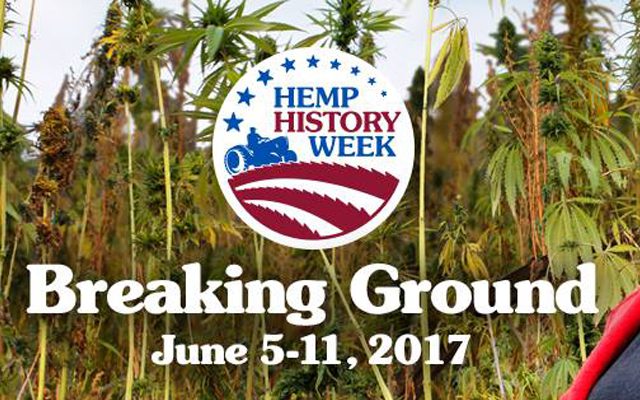
The second week of June marks the eighth annual Hemp History Week, and hemp advocates are putting on educational events across America to demystify the multi-tasking plant.

Going into Hemp History Week, the number one (and two) hemp fact to know is: While it’s a cousin of cannabis, the hemp plant is unique in that it can provide the therapeutic benefits of cannabidiol (CBD) with only trace amounts of the psychoactive compound tetrahydrocannabinol (THC). Hemp also has limitless industrial possibilities.

For decades, America has had a checkered past with hemp. The once-thriving crop was banned in the 1930’s, then encouraged for the war effort throughout World War II, only to be banned again in the 1970’s. More recently, there’s been progress as the crop can be cultivated under certain circumstances and on a state-by-state basis.

Hemp History Week

Hemp History Week is the largest national grassroots effort to restore support for industrial hemp farming in America. The many events taking place June 5th through June 11th will include retail promotions, hemp plantings (in the states where hemp farming is legal under Section 7606 of the U.S. Farm Bill), documentary screenings, as well as farmer outreach.

Did you know that the hemp you see in national grocery stores like Whole Foods are actually imported from Canada, Europe, and China? It’s a controversial issue for domestic farmers as they fight for the right to grow and profit off American grown hemp.

According to the campaign website, “Hemp not only nets up to 2.5-times the value of U.S. corn and soy, it also has wide-reach environmental benefits including soil remediation, prolific pollen production for our bees and beneficial insects, and no synthetic pesticides nor fertilizers necessary to grow.” While some states continue to fight for hemp farming, progress is being made in states like Kentucky, Vermont and Colorado.

In 2014, these three states became the first to grow hemp under Section 7606, Legitimacy of Industrial Hemp Research, of the 2014 Federal Farm Bill. Now, hemp farming has reached many more states including: California, Colorado, Hawaii, Indiana, Kentucky, Maine, Minnesota, Nebraska, Nevada, New York, North Dakota, Oregon, Tennessee, Virginia, and West Virginia.

The objectives for Hemp History Week:

  • Celebrate America’s rich history with industrial hemp before it was outlawed and educate the public about the barriers to hemp farming in the United States.
  • Advocate for a federal policy change while sending a strong, positive message to the Executive Branch and Congress to remove barriers to hemp farming and let farmers grow the versatile and profitable crop.
  • Engage consumers by showcasing the range of hemp products available and the nutritional as well as environmental benefits that they provide.

“As recognition of hemp’s excellent nutritional profile grows, along with the demand for regenerative agricultural practices and advancements in plant-based innovations, hemp stands to once again be a vital and viable crop in the United States and around the world,” the Hemp History Week organization said in a statement.

Take action

A national nonprofit advocacy group, Vote Hemp was founded in 2000 with the mission to remove legal barriers to American industrial hemp farming. Vote Hemp estimates that the hemp market in the U.S. achieved 25% growth in 2016, reaching a total market value of $688 million.

This year, the focus is on garnering support from constituents across the country to ask their Senators to support the Senate version of the Industrial Hemp Farming Act. According to Vote Hemp, “the Bill Amends the Controlled Substances Act to exclude industrial hemp from the definition of “marihuana.” Writing to your senator is only few clicks away with this letter writing tool on their website.

This year’s theme for Hemp History Week is Breaking Ground, which focuses on how regenerative hemp farming, hemp foods, and other hemp products provide sustainability solutions for the next generation. Below are a few hemp-centric events from across the nation. You can also visit the campaign website to search for a nearby event.

Grateful Hearts Unite for Hemp: Boulder, Colorado

The Industrial Hemp Research Foundation (IHRF) has organized an event on June 9th to celebrate and educate people about the history of hemp. From 2:30 – 5:00 Café Aion will host the Grateful Hearts Unite for Hemp, a pre-party fundraising celebration while the Dead & Company is in town for a concert at Boulder’s Folsom Field.

“It’s a great opportunity for the Earth conscience followers of the band to learn more about hemp,” explains Melanie Rose Rodgers, Community Engagement Director for IHRF. The event and fundraiser will highlight the Industrial Hemp Research Foundation, a local 501c3 nonprofit dedicated to supporting industrial hemp research programs at institutions of higher learning and education in Colorado and universities across America.

Attendees are encouraged to wear all the hemp clothes and accessories they own. The ticketed event includes giveaways from hemp sponsors, food, drinks, and music from the band Pistols and Petticoats. 

A note from the organizer: “Cafe Aion is conveniently located 0.2 miles (7 min. walk) to the Dead & Co. concert venue, Folsom Field. We welcome the music community, Dead fans, and fellow hempsters for this unique, community event celebrating Hemp History Week!”

Get HIP on HEMP: Washington, D.C.

If you’re in the District and want to learn more about hemp, there’s an educational event at WeWork’s K Street location on June 8. The Hemp History Week event is organized by the local hemp business Get Hemp Butter, an all-natural beauty and wellness salve company. Consult DC and High Caliber Events are also hosting.

Featured speakers include: Lauren Stansbury, Media Relations Manager of Dr. Bronner’s; DC Scroger, local Cultivator and Host of DC’s first Grow Show; and Suzannah L. Simmons, Director of Operations & Outreach for Cogent Law Group. Tickets are free and available online.

Harborside Health Center: Oakland, California

The legendary cannabis dispensary will be celebrating Hemp History week with interactive industrial hemp exhibit displays of building materials, plastics, fabrics, fibers, and clothing. There will also be free samples of hemp seeds and body care products. Proceeds from the purchase of posters, CD’s of John Trudell, and the DVD Bringing It Home will go to the organization Hempstead Project HEART (Hemp Energies Alternative Technologies). The event is on June 11th from 1:00PM to 4:00PM.

Harborside’s Co-Founder and Executive Director, Steve DeAngelo, is well-known in the cannabis and hemp space. A lifelong cannabis activist and businessman, DeAngelo has positioned himself as one of the most respected experts in the industry.

He literally wrote the book on the plant, called The Cannabis Manifesto, and is credited with creating the model medical cannabis dispensary with Harborside. According to his dispensary website, “he sees hemp and cannabis as one issue, not two.” DeAngelo is also the Co-founder and CEO of Ecolution, an international manufacturer of hemp clothing and accessories.

Search for Hemp History Week events near you with this handy search tool from the campaign website.


How America is Celebrating Hemp History Week
Source: Marijuana Times
Filed Under: Culture, Featured, hemp, industrial hemp

2017 Cannabis Cultivation Conference

June 3, 2017 by Staff Writer Leave a Comment

cannabis-cultivation-conference-2017

I attended the inaugural Cannabis Cultivation Conference at the Oakland Marriott City Center in Oakland, California this past March and was very impressed with the professional business-to-business atmosphere. Valuable education and advice was offered by keynote and panel speakers, as well as over 50 product and service exhibitors. Networking opportunities abounded and hundreds of experienced individuals, as well as eager newbie registrants, exchanged ideas and made connections during program breaks, lunch and social time.

Participants traveled from all across the country and world to Oakland, California for the event – with an especially strong contingent from the western cannabis-friendly U.S. states of Colorado, Washington, Oregon, Alaska and California. All the expected topics were well covered, from best growing practices to licensing procedures – and even the fundamentals of futures markets, in anticipation of cannabis eventually being treated like any other agricultural commodity. Three days of intensive learning! I tried to take it all in. Here’s a brief breakdown of a few highlights.

The very first session dove right into the emerging challenges and opportunities presented by the evolving laws and processes in newly legal states. Here in California, for instance, the aftermath of Prop 64 is leading to a flurry of rule-making and a nearly impenetrable minefield of punishing fines for failing to have your ducks in a row. There will be more than a dozen classes of Medical Cannabis Cultivation Licenses, with annual fees ranging from $560 for a nursery to $38,350 for a medium indoor grow. But local permits must first be obtained and many cities/counties are still debating what to allow. Not surprisingly, a paperwork relief industry is springing up around the application process as lawyers and consultants chart winning paths through the regulatory straight-jackets as fast as bureaucrats can erect more daunting barriers to entry.

Étienne Fontán, Co-owner and Vice President of the Berkeley Patients Group, kicked off day two with an entertaining and heartwarming keynote speech tracing his personal journey through life as an activist and entrepreneur. A follow-on panel before lunch addressed several serious business issues affecting the state of the cannabis market, including the Obama era Yates memo on banking, FinCEN (Financial Crimes Enforcement Network) money laundering rules, and Internal Revenue Code section 280E which has been interpreted to prevent cannabis enterprises from deducting business expenses on tax returns.

Lunch breaks were held in the Exhibit Hall, so besides schmoozing and boozing between snacks, there was plenty of non-stop product info to ingest. One booth in particular that caught my attention was the big aquarium display tank brought by Oxygen Research Group LLC . Experienced cannabis cultivators know the value of delivering oxygen to the roots of plants and have long employed aquarium air-stones and noisy pumps to bubble or aerate water. The O2Grow uses hydrolytic electrolysis to silently break apart water molecules (H20) and create a mesmerizing underwater fog of hydrogen plus super-saturating oxygen nano-bubbles. Science geeks will correctly guess that much of the output recombines into water, and stray hydrogen simply dissipates at the surface. What’s interesting is that so much of the oxygen dissolves into the water since the bubbles are too small to break surface tension. University research found a 21% yield increase when this ultra-oxygenating tech was applied to organic brandywine tomato culture – impressive results!

A panel discussion later that day was devoted to increasing yields. Many techniques were reviewed that you’ve likely already heard about or employed, such as high stress training/super-cropping, automated fertigation, and soil salinity monitoring. Did you know that compounding your own bulk batches of fertilizer from cheap 50 pound bags of base salts can save you 90% over commercial off-the-shelf pre-mixes? I was also impressed with a simple suggestion for optimizing square footage, reducing wasted floor space by virtually eliminating aisles with wheeled benches – kinda like those puzzles we played with as kids where you pushed squares around in a plastic frame to form a pattern by manipulating the one empty space. While writing this article I chanced upon a short video demonstrating this idea on YouTube.

Facility automation was the next hot topic on the track I pursued. Scott Reach, founder of Rare Dankness, blew the crowd away with his investments in futuristic farming technology. Water recycling is a key to being green. Elimination of unskilled labor keeps costs down. What gets automated? Almost everything – and I’m not just talking trimming bud, think germination and up-potting, machine vision based IPM, data collection and climate control.

I found a podcast called Blazin’ with Bobby Black featuring an informative interview with Mr. Reach describing his career history that I thought was interesting. Scott feels legalization & competition drives down prices dramatically; to that end he is administering the financial discipline of big agriculture, working toward a $200/lb cost of production for 8 million grams/year via greenhouse automation, from his current $900/lb .

Any advice and opinions about the cultivation of Cannabis offered by Bruce N. Goren are his own and do not represent the University of California or the Master Gardener Program.


2017 Cannabis Cultivation Conference
Source: Marijuana Times

Filed Under: cannabis cultivation, cannabis event, conference, Cultivation, Culture, Featured

Accelerating Your Growth

June 2, 2017 by Staff Writer Leave a Comment

accelerating-your-growth-AGS

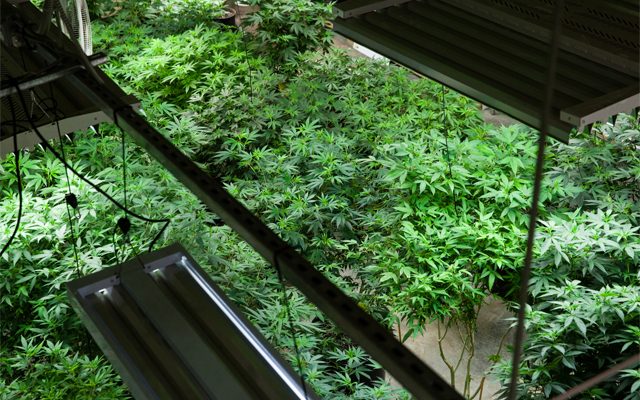
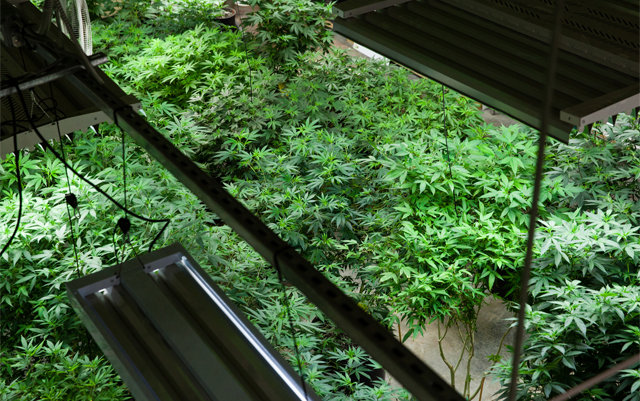
Anyone who has ever grown cannabis indoors knows how difficult it can be. If you’re not lucky enough to be able to grow huge plants in a greenhouse or outdoors in a place with great climate for most of the year – like northern California – then you’ve likely dealt with the myriad of issues that arise when you take something meant to be done easily outdoors and bring it inside.

There are many reasons to grow cannabis indoors, climate and security being chief among them. Indoor growing means year-round growing and plants grown inside a secure building are so much easier to keep away from potential thieves.

Fortunately, technological advancements in cultivation are making it easier to grow large amounts of plants indoors in ways that are cost-effective but that do not sacrifice quality. And helping growers build cost-efficient spaces for growing is exactly why companies like Accelerated Growth Solutions exist. According to their website, AGS “provides the best climate control equipment in the cannabis industry.  We not only offer the most efficient systems, but unrivaled precision in environmental control based on temperature, humidity, and vapor pressure differential.”

AGS systems can automate every aspect of the climate plants exist and thrive in. They have water-cooled systems that are up to 50% more efficient than air-cooled systems, as well as pre-fabricated “Central Utility Plants” which are a “a controlled, single source environment” that AGS can provide “in a matter of months rather than the years it may take to engineer and construct a field built system integrated into the building.”

The environment your cannabis is grown in is critically important to the success of your crop. Stability is key, and systems from AGS provide that stability. They provide not only the products, but also the know-how and can guide you step-by-step through the process of growing top quality cannabis in an indoor environment.


Accelerating Your Growth
Source: Marijuana Times

Filed Under: cannabis cultivation, Cultivation, Culture, Featured, growing cannabis, Sponsored

  • « Previous Page
  • Page 1
  • …
  • Page 3
  • Page 4
  • Page 5

Primary Sidebar

Listing Categories

  • Agriculture
    • -Growing Guides
    • -Hydroponics
      • --Schools
  • Arts and Recreation
  • Education
  • Employment
  • Finance and Investments
  • Health and Medicinal
  • Legal
  • News, Magazines, Blogs
  • Shops

Recent News

Rebel Cannabis Celebrity Ed “NJWeedman” Forchion Calls Instagram His Biggest Foe Since the DEA

Best Weed Grinders for 2022

Quebec May Require Proof of Vaccine for Cannabis, Liquor Store Customers

Recreational Cannabis in Montana Brings in $1.5M

Copyright © 2026 · 420 Department