
• Skip to content
  • Skip to primary sidebar

420 Department

Over four hundred and twenty things

  • Home
  • Add Listing
  • Contact

Legislative

Ohio Medical Cannabis Dispensaries Officially Open

January 18, 2019 by Staff Writer Leave a Comment

ohio-medical-cannabis-dispensaries-officially-open

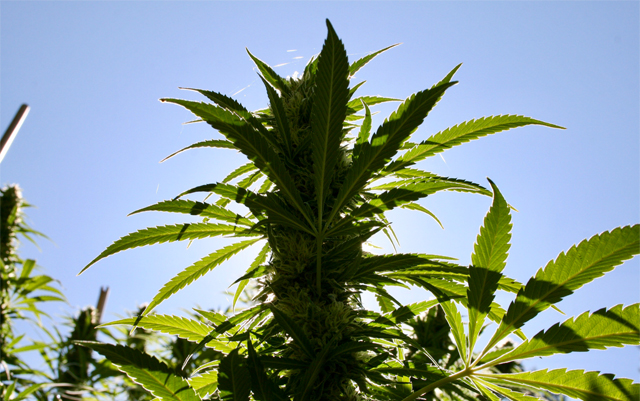
Medical cannabis dispensaries in Ohio officially sold the first legal plant medicine this week. According to a report from Ohio 10 TV, four dispensaries were open for the first day of sales. This is good news for patients in need of cannabis medicine, but the state’s program is definitely not without its fair share of complications.

The state government has issued over 56 licenses to dispensaries, but unfortunately, only four of those were open this week – two in Wintersville, one in Canton, and one in Sandusky. A dispensary in the Cleveland area also expects to open within the next few days, according to Ohio 10 TV.

And only cannabis growers are currently licensed and certified to operate. Processing and manufacturing facilities for cannabis will still have to wait longer to be licensed, which is naturally causing some challenges. The medical program in Ohio currently allows for physicians to recommend patients use medical cannabis if they have one of 21 qualifying conditions. At this time, only cannabis flowers are being sold. Edibles, vape pens and tinctures will be available for purchase once the processing centers are open and operating.

As we are seeing with other legal states, the prices of the first legal cannabis being sold in Ohio are sky-high. An ounce of cannabis in Ohio medical cannabis dispensaries costs an astronomical $500. This, of course, isn’t including what it costs to see a doctor for a recommendation, and any costs for a medical card itself. This is a shame, because such high costs encourage the black market to flourish.

In addition to the high costs of the product itself, the medical cannabis program in Ohio has been delayed several times. Cannabis sales were initially slated to being last September, but regulators say that the quality of license applicants was lacking. Ohio Senate Minority Leader Kenny Yuko, a cannabis legalization advocate, made a public statement criticizing the regulatory officials in the state for delaying sales and making patients wait for the cannabis medicine they need. He says that the number of dispensaries and processor licenses needs to continue to grow, creating “An opportunity for the new governor to do right by people who are suffering,” he said.

Yuko went on to urge Ohio Governor Mike DeWine to prioritize the growth of the medical cannabis program in the state. At any rate, at least some Ohio patients are finally given access to the medicine that they need and have been waiting for, and hopefully the program continues to expand successfully.


Ohio Medical Cannabis Dispensaries Officially Open
Source: Marijuana Times
Filed Under: Business, dispensaries, Featured, Legislative, medical marijuana, Ohio

Cuomo Unveils Cannabis Legalization Plan for New York State

January 17, 2019 by Staff Writer Leave a Comment

cuomo-unveils-cannabis-legalization-plan-for-NY-state

New York Governor Andrew Cuomo’s long pivot towards cannabis legalization came to a head at the close of 2018. In mid-December, the Governor who once considered cannabis a gateway drug announced his emphasis on legalizing adult-use cannabis in the state. Cuomo went so far as to call on lawmakers to legalize marijuana within a busy first 100 days of the Governor’s third term in office.

Well over 60% of New Yorkers support legalization for scores of reasons. For Governor Cuomo, the reason is mainly driven by criminal justice reform. The move would be part of a proposed justice agenda that also focuses on stronger gun control laws.

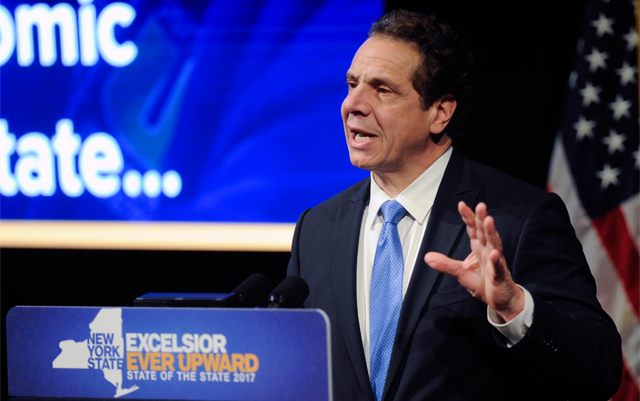
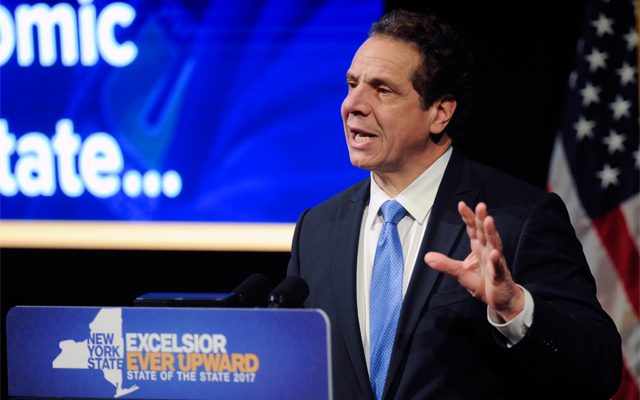
Since the announcement, New Yorkers have waited to learn more about the proposed cannabis plan. On Tuesday, January 15th, the Governor released additional information about his administration’s plans during his State of the State address. The excitement was clearly felt right at the top when the Governor opened by proclaiming that 2019 was going to be a great year.

Cuomo’s plan centers on an environmental plan referred to as the Green New Deal. This is not to be confused with Rep. Alexandria Ocasio-Cortez’s Green New Deal. Though, both plans do have overlap when it comes to environmental.  

The Governor’s plan to legalize adult-use cannabis hopes to come within the first 100 days of the year. However, a jam-packed agenda consisting of, but not limited to, women’s equal rights, criminal justice reform, broadband internet for all and election reform could bog down the efforts.

“Stop the disproportionate impact on communities of color,” the Governor emphatically said while highlighting the plan. He added, “And let’s create an industry that empowers the poor communities that paid the price and not the rich corporations who come in to make a profit.”

About an hour into the address, the Governor would elaborate on his adult-use program plans. Citing the findings of reviews the Governor launched last year, Cuomo called for a regulated market for adults 21 and over. Once again, an emphasis was placed on empowering poor communities instead of rich entities. Cuomo called this “an economic opportunity.”

Cuomo went on to touch on a few key topics of the plan. Highlighting the list was once again criminal justice reform. With legalization, communities of color should feel less of an impact concerning criminalization; which currently affects these communities at rates of 8:1 to white communities despite similar usage rates. The plan also aims to correct some past wrongs in the justice system by automatically sealing certain cannabis arrest records.

The plan also believes that it will provide quality control to a market that can only regulate medical cannabis consumption under the current laws. It was also announced that counties and large cities could opt out of the program. This option has not sat well with some State Senators. In a tweet, Julia Salazar, representing the state’s 18th District, called the option unacceptable.

A marijuana legalization proposal that allows counties & large cities to “opt-out” of the regulations that would empower directly impacted communities is unacceptable.

New Yorkers have been enormously harmed by criminalization. Alleviating that harm must be our top priority.

— Julia Salazar (@JuliaCarmel__) January 15, 2019

Closing out this portion of the address, Governor Cuomo projected the state would earn $300 million in tax revenue, though no timeline was specified. The plan should also create “good union jobs that we need”, according to Cuomo, though no numbers were projected during the address.

Watch the full State of the State address below:

Some had hoped that Cuomo would use the address to speak more to specifics related to the program. That said, a packed agenda left the Governor little time to go in-depth on most topics during the nearly hour and a half speech. However, more details were made available in the Governor’s fiscal year 2020 executive budget financial plan.

Provisions include the enactment of the Cannabis Regulation and Taxation Act which would tax $1 per dry weight gram of flower cultivated and $.25 per dry weight gram of trim. A second 20% tax would be imposed on a wholesalers invoice to retail dispensaries. Wholesalers also face a 2% tax on the same sale “but collected in trust for and on account of the county in which the retail dispensary is located.”

Ryan Lepore, a Business Operations Specialist for the telemedicine company PrestoDoctor thought that “Cuomo was very vague in his approach to unveiling the program – though the summary was on the correct track.” He added, “The devil is in the details with any new program or system, especially with something as complicated as an adult-use cannabis program.”

The prospects for legalization appear to be in the state’s favor. With Massachusetts already luring New Yorkers across the border for legal cannabis, the pressure is on. With the impending legalization in New Jersey, New York lawmakers understand that a significant sum of money will be lost as long as the state is bookended by neighboring legal states.

Speaking of state lawmakers, legalization hopes received a significant boost when the 2019 session of Congress began. For the first time since 2010, Democrats gained full control of the state government. This should all but ensure that New York’s agenda for cannabis and several other subjects remains progressive until, at the very least, the next elections are held.

Governor Cuomo’s insistence on cannabis reform is a stark contrast from the Governor of just a year or two ago. However, the change has cannabis near the top of the list of priorities during his third term as Governor. Passing the law within the first 100 days could be difficult with a large sum of high-priority legislation on deck. That said, cannabis legislation means criminal justice reform and additional income for the state. It is likely that the multiple benefits associated won’t be lost on Cuomo or other state lawmakers. Only time will tell if this comes to fruition in the first 100 days or in 2019 at all.


Cuomo Unveils Cannabis Legalization Plan for New York State
Source: Marijuana Times

Filed Under: cannabis legalization, Featured, Legislative, New York

Michigan Sees A Shortage of Medical Cannabis So Unlicensed Facilities Are Re-opened

January 17, 2019 by Staff Writer Leave a Comment

michigan-sees-shortage-of-MMJ-so-unlicensed-dispensaries-are-reopened

At the beginning of the year Michigan legislature required that all non-licensed medical marijuana dispensaries shut down until proper licensing is obtained. Unfortunately, the closing of over 70 dispensaries left very few with their doors open to patients. This, in turn, abruptly left many patients without access to their medicine.

Last Wednesday, the Medical Marihuana Licensing Board agreed in a unanimous 4-0 vote to allow dispensaries that are in the process of applying for a license and have a local buy-in to re-open their doors – at least until March 31st.

“We have heard from Michiganders closely affected by the ongoing transition to licensed marijuana facilities,” Gov. Gretchen Whitmer said in a news release Tuesday. “It is important that we ensure that patients have access to their medicine while the medical marijuana industry continues to develop.”

Along with the lack of open dispensaries, 72 unlicensed provisioning centers were closed at the start of the year and there are not enough established licensed growers in the state. All of this has led to an extreme shortage of product. Regulators have now put temporary regulations in place in an effort to fix this problem, allowing licensed provisioning centers to continue buying marijuana from a caregiver or temporarily operating facility and sell it without testing it until March 31st.

“There is a shortage of supply in the market because there are only a handful of licensed growers in Michigan,” Jeff Schroder with law firm Plunkett Cooney said. “This would allow dispensaries and retail provisioning centers to purchase their quantities from caregivers again.”

However, patients are required to sign an acknowledgement that states that the product has not met complete testing requirements before they are able to purchase it. As it stands now, there are nearly 300,000 medical marijuana cardholders in the state of Michigan. For several years they have been purchasing their medical marijuana from local dispensaries that get their product from unlicensed growers or even local caregivers – so most of them are frustrated with the less than smooth transition to a more regulated market.

“I think it’s a step forward,” said The Reef’s Rush Hassan. “It’s definitely a short term solution but it does open up patient access for these products.”

Until the medical marijuana industry in the state is functioning optimally, it will be almost impossible to successfully roll out the recreational industry that was legalized in November 2018. Hopefully by the time these temporary regulations expire at the end of March there will be enough licenses for the industry to properly sustain itself.


Michigan Sees A Shortage of Medical Cannabis So Unlicensed Facilities Are Re-opened
Source: Marijuana Times

Filed Under: dispensaries, Featured, Legislative, medical marijuana, michigan

A Look Back at One Year of Adult Use Marijuana Sales in California

January 12, 2019 by Staff Writer Leave a Comment

a-look-back-at-one-year-of-adult-use-marijuana-sales-in-california

For obvious reasons, the cannabis industry in California gets a lot of coverage, both from the “cannabis media” and from more mainstream outlets. As many know, the consumer market in California is huge; by itself, California boasts one of the largest economies in the world. Comprising about 12% of the entire country’s population, California holds 10 million+ more people than live in Texas and its population is roughly the same as those of Florida and New York combined. In other words, it’s big and there are a lot of people there.

In November of 2016 – after 20 years of medical marijuana – voters in CA approved recreational marijuana legalization, with sales beginning in January of 2018. We covered much of the journey of the last year here at The Marijuana Times, from the good news to the most ridiculous. High taxes and restrictive regulations kept a lid on explosive growth, forcing many smaller competitors out of business before they really got started.

Some of the problems were anticipated by activists in the state. “[T]hese problems were foreseeable from the outset, from the time the legislature passed the Medical Marijuana Regulation and Safety Act (2015), the template on which the current regulations are based,” Dale Gieringer, Director of CA NORML, told The Marijuana Times.

“It was inevitable that CA’s culture of backyard ‘mom & pop’ growers would be unable to compete in a legalized market,” Dale said. “It’s not like the parsley, tomatoes, or grapes we buy in the store are produced by small-scale backyard farmers. Modern day agriculture is performed most economically by large agribusiness enterprises.”

This new reality means that the demand served by small growers before legalization will now be met for the most part by large-scale growers. “Sadly, there was no way that all of these legacy growers could be accommodated under legalization. (I say sadly, because many of them were friends and supporters during the 40-year struggle for legalization),” Dale told us.

And while focus is on the adult use industry, Dale also wants lawmakers to keep an eye on improving the newly regulated medical marijuana program in CA. “[I]t’s most important that access for medical patients be protected and expanded, especially since MMJ has proven to be an effective harm reduction substitute for prescription opiates. Existing taxes and regulations have made it harder for needy patients to get affordable access to the medicine they need.” Along these lines, CA NORML would like to see the state protect medical marijuana patient giveaways as well as create employment and prescription drug protections for medical patients in the state.

Overall, Dale thinks the bureau that oversees adult use cannabis in California is doing a good job, considering the restraints it operates under. “Under Lori Ajax’s leadership, the Bureau of Cannabis Control has been very responsive to industry and consumer concerns. We are especially happy that they have ruled that local governments can’t ban licensed deliveries to residents in their jurisdictions. The problem is that there is only so much BCC can do within the straightjacket of existing state laws. For example, there’s nothing BCC can do to spur local governments to license more dispensaries. Nor can they streamline the laws that have chopped up transportation, cultivation, distribution, testing, manufacturing, etc. into so many rigidly discrete categories.”

The potential of the cannabis market in California is massive. Hopefully they are laying the groundwork for an industry that serves consumers with the best products at the lowest prices – something that should be the goal no matter what the industry.


A Look Back at One Year of Adult Use Marijuana Sales in California
Source: Marijuana Times

Filed Under: adult use, California, Featured, Legislative, recreational marijuana

Massachusetts Could See Cannabis Cafes in the Near Future

January 11, 2019 by Staff Writer Leave a Comment

MA-could-see-cannabis-cafes-in-the-near-future

Cannabis enthusiasts in Massachusetts could soon be given the option to legally consume the plant in public in cafes and lounges, after the State Advisory Board’s public safety subcommittee voted to recommend such activities be legalized. NBC Boston reports that the measure to recommend legal social consumption spaces passed by a 5-2 vote. The same board also unanimously voted to allow legal home delivery of cannabis products.

While adult-use recreational cannabis is now legal in ten states and Washington D.C., consumption in public spaces is still off-limits, usually punishable by a fine if caught. These restrictions on cannabis consumption are often frustrating to advocates of the plant medicine, considering there are no shortages of the public consumption of tobacco and alcohol.

Walpole Police Chief John Carmichael was one of the only two parties who voted no at the committee meeting, trotting out the same antiquated prohibitionist rhetoric that we’ve seen debunked countless times. Carmichael claimed legal cannabis cafes and lounges would lead to more intoxicated drivers on the roads, which is a claim that has been proven false time and time again.

Chief Carmichael also claimed that cannabis cafes would be targets for robberies, which is a talking point we haven’t seen much of, and a curious one at that. Are liquor stores, bars and tobacco shops higher targets for robberies? It’s a bit of a surprise that Carmichael didn’t bring up increased youth cannabis usage and overconsumption, which are two other prohibitionist talking points that simply hold little to no water.

The recommendation from the public safety committee to legalize public cannabis consumption now makes its way to another layer of unnecessary bureaucracy for final consideration, which is the Cannabis Control Commission. The five-member panel oversees all of the regulations for the state of Massachusetts.

“The commission would need to reopen and amend its current regulations to allow for social consumption and delivery licenses in the commonwealth,” Maryalice Grill, the commission’s press secretary, said in a statement.

Many cannabis advocates would likely argue that it should be left up to the taxpayers whether they want legal consumption spaces, but that’s how the state currently operates. Massachusetts came close to legalizing public cannabis consumption spaces when the plant was first legalized for recreational purposes back in 2017. The state governor shot down cannabis cafes then, but now the idea is resurfacing. Will public consumption of cannabis be legal in Massachusetts? Only time will tell.


Massachusetts Could See Cannabis Cafes in the Near Future
Source: Marijuana Times

Filed Under: Featured, legal cannabis, Legislative, massachusetts, public consumption

Vermont Supreme Court Says The Scent of Marijuana is Not Grounds for Search and Seizure

January 10, 2019 by Staff Writer Leave a Comment

vermont-supreme-court-says-smelling-marijuana-is-not-grounds-for-search-and-seizure

It’s a known fact to those pushing for cannabis legalization that there are a number of problems when it comes to how the criminalization of cannabis has been enforced. All around the country people are arrested daily for cannabis possession, with a large majority of those people being minorities. This is one of the biggest reasons that so many individual municipalities have moved towards decriminalization to help end the unnecessary arrests.

After two years, the Vermont Supreme Court reached a unanimous decision that could drastically reduce the number of people arrested on cannabis possession – the smell of marijuana is not grounds for search and seizure.

“Police have had enormous discretion to stop and search motorists, including for erroneous or pretextual reasons and on the basis of implicit or explicit bias,” said Lia Ernst, the ACLU attorney who argued the case. “In ruling that police can be liable for such acts, this decision sends a clear message — no one is above the law, and if police make bad stops, they can and will be held accountable.”

This comes after Gregory Zullo was pulled over because snow was covering the registration sticker on his license plate – which is not a traffic violation. His vehicle was then seized by State Trooper Lewis Hatch, who justified the search and seizure by claiming to have smelled marijuana. In Vermont, neither the license plate issue nor the marijuana are illegal – so Zullo sued and the court ruled in his favor.

The National Association of Criminal Defense Lawyers (NACDL), which submitted a joint amicus brief in 2018 in support of Zullo, lauded the decision: “All people in this country should be able to trust that law enforcement is not targeting them for any improper purpose. And now the Vermont Supreme Court has held that the people of Vermont have a path to vindicate their rights should they be so violated.”

Originally, the state court had dismissed the lawsuit, claiming the officer was immune from being sued. However, the state high court reinstated the case, deciding that officers could be sued for discriminatory searches and seizures in violation of the Vermont Constitution.

In a time when cannabis is becoming legal for recreational use in more and more states – including Vermont – it makes sense that the scent of marijuana, especially a faint scent, should not be enough to warrant a search. In many cities and states, marijuana is now only a ticketed offense, with the intention of reducing the number of arrests and hours wasted due to criminalization.


Vermont Supreme Court Says The Scent of Marijuana is Not Grounds for Search and Seizure
Source: Marijuana Times

Filed Under: cannabis legalization, Featured, Legislative, Vermont

An Oregon Bill Could Cause New Conflict with the Federal Government Over Legal Cannabis

January 8, 2019 by Staff Writer Leave a Comment

an-oregon-bill-could-cause-new-conflict-with-the-federal-govt-over-legal-cannabis

There are a lot of cannabis related bills making their way through legislature right now – but one that is expected to be introduced soon in Oregon takes a leap that could lead to federal interference on a new level if it becomes law. The bill would make it legal for wholesalers to export dried cannabis to other states in the country where cannabis is legal – which is entirely illegal under federal law no matter which way you look at it.

As it stands there are very few protections for the cannabis industry to prevent the federal government from coming in and shutting things down simply because they can, and in the end those protections rely on states keeping their legal cannabis within their own borders. While the bill would only allow wholesalers to sell to states where cannabis is currently legal – like Washington and California – it still goes against the guidelines set by the feds that have kept them out of legalization so far.

“There are plenty of markets that would be thrilled to have world-class cannabis,” said Adam Smith, founder and director of the Oregon-based Craft Cannabis Alliance, in an interview with the paper. “But prohibition keeps us from sending it into those markets.”

Why, if it could cause such conflict with the federal government, would Oregon lawmakers be looking to take things to this new level and test waters with exporting cannabis? Mostly to help solve a problem of their own, which is an extreme oversupply.

There is currently an excess of roughly 1.3 million pounds of cannabis sitting around in Oregon since there is no limit on cultivation licenses in the state. With more growers than necessary to keep up with the supply and demand, there is far more cannabis being grown than can be consumed by those living in the state. With licenses still being issued, this is a problem that isn’t going to go away on its own.

However, Oregon isn’t the only state with an overabundance of cannabis since legalization. While the industry often starts off with a slump in supply right after sales begin, eventually this evens out, prices drop and suddenly there is more bud than imagined just sitting on shelves – so exporting might be harder than legislators imagine.

It is uncertain if this bill will gain enough support to make it to the governor’s desk for a signature – or if the governor would consider passing the legislation if it got that far. However, if it does make it that far, then there is a strong possibility that it would be challenged by federal law in some form or another.


An Oregon Bill Could Cause New Conflict with the Federal Government Over Legal Cannabis
Source: Marijuana Times

Filed Under: cannabis sales, Featured, legal cannabis, Legislative

Cannabis Law Reform Moves Through Much of The Northeast in 2018

January 6, 2019 by Staff Writer Leave a Comment

cannabis-law-reform-moved-through-much-of-the-northeast-in-2018

The Northeastern portion of the United States was a whirlwind for cannabis progress in 2018. Each state and district saw progress of some variety. While most took progressive steps, some remained relatively stagnant. With such a wild and mostly progressive 2018 in the books, let’s examine the marijuana news coming out of each state.

Maryland

Maryland began the year with a medical cannabis program, which officially launched in March. However, the bill did create confusion for some. In one case, lawmakers found themselves uncertain around medical patients and any potential arrests. The state also passed a medical marijuana bill which aimed to create more access for minority business owners to become growers and processors.

By December, it was clear that Maryland’s program is a hit. So much so that sales surpassed expectation, pulling in over $100 million in revenue. Potentially even more impressive is the 300 new patients registered each day.

Washington, D.C.

Despite much activity on Capitol Hill, the country’s capital saw little change in 2018. The unorthodox market continues not to allow cannabis sales. Instead, a product can be gifted along with other purchased items. The ban on dispensaries continues to hinge mainly on bureaucratic reasons in Congress. Though, 2018 saw efforts by cannabis attorneys to change that. The November midterm elections have also given hope to rules changing when Democrats take control of the House next year.

Delaware

Delaware spent much of 2018 in limbo. While some lawmakers pushed for recreational cannabis, others opted for the status quo. This includes a failed June attempt in the House. There, the measure fell four votes short of the needed 25 to move the bill to the Senate.

Despite the setback, the state did make progress in 2018. That includes passing a bill which expunges possession records for those charged with such crimes prior to 2015. Now, with neighboring New Jersey on the edge of legalization, some say Delaware lawmakers are watching intently.   

New Jersey

New Jersey saw immense progress in 2018, though no certain milestones have been reached just yet. The year began with staunchly anti-cannabis Governor Chris Christie succeeded by a pro-cannabis governor, Phil Murphy. Murphy swore to legalize adult use within the first 100 days of his term. This did not occur. Instead, cities like Point Pleasant and Tom’s River announced plans to ban medical and/or recreational sales.

February saw the state propose a decriminalization bill. Another bill followed in March. This one centers on home growing and the allowance of 400 legal dispensaries. That same month saw the state expand access to its medical program. By the spring, rumors of legalization were heating up. In April, the state Attorney General acknowledged that law enforcement was preparing for the changing laws.

The rest of the year consisted of steady progress towards completing the bill. However, in December, state lawmakers announced that the bill will not go up for a vote in the final days of 2018. Rather, it appears that the state is poised to become the 11th state to legalize in early 2019 – becoming the second to follow in Vermont’s path.

Pennsylvania

Pennsylvania’s medical marijuana program began in 2016. This past year saw it make significant gains with the start of its medical cannabis market. In short order, the demand for medical products outpaced expectations.

The standout figures helped spur on further advancement of the market. That includes granting 23 additional dispensary permits this past December. The move gives the state 79 locations for patients. Additionally, the state has considered expanding its list of qualifying conditions. However, one setback came when the state rejected all eight applicants attempting to partner with universities for research. A new round of applications is expected to open in early 2019.

New York

New York State’s about-face on cannabis access continued in 2018. The year began with Governor Andrew Cuomo, a staunch opponent to cannabis, launching a study into regulated marijuana in New York. By the summer, the study, which was led by the state Health Department, concluded that New York should legalize adult use. Recently, the Governor continued his change of tune by calling for the legalization of cannabis within the first 100 days of 2019.

Throughout the year, New York State also saw progress concerning medical access. One measure saw the state become one of the first programs to allow anyone with an opioid-based prescription to receive medical marijuana. Meanwhile, in New York City, Mayor Bill de Blasio told police to stand down on cannabis smoking arrests. Instead, the city now pushes summonses as a crime deterrent. The decision came as the city looks to overhaul its policing policies towards cannabis and people of color.

Connecticut

Much of 2018 in Connecticut centered on expanding its current cannabis laws. So far, the state has a medical program and has decriminalized small possession. In April, the state House Appropriations Committee approved a bill which would legalize the plant. The next step would be consideration of the floor. This was expected before the end of the year, but that will not be the case. Nothing is guaranteed for legalization in 2019, but there does appear to be some progress.

Despite the setback, in December, Governor-elect Ned Lamont offered his support for adult use cannabis. Meanwhile, around the same time, the state doubled its number of dispensaries.

New Hampshire

If this article were the famous Sesame Street song “One of These Things is Not Like the Other”, New Hampshire would be that thing. In terms of Northeastern states, New Hampshire appears set on keeping cannabis at bay. The state has a medical program and expanded its program by adding a dispensary in a lightly populated part of the state.

However, the likelihood of more expanded access coming doesn’t appear likely. Despite residents favoring legalization, Governor Chris Sununu has vowed to veto legislation of any type. In December, he called legalization “the next major battle” and uses anti-marijuana groups for advisement on the matter.

Vermont

Vermont began 2018 by making history. In early January, state lawmakers approved an adult-use cannabis bill, which was signed into law by Governor Phil Scott. This became the first time in which a state-approved recreational use through legislative means rather than a vote by citizens.

With sales not yet beginning, lawmakers spent the rest of the month hammering out the program’s details. They include considering options which would fast-track erasing misdemeanor offenses from criminal records. This led to the establishment of expungement clinics which will begin in the coming months. Additionally, Vermont passed a home cultivation law which allows residents 21 and over to grow in their homes and potentially rental properties.

Meanwhile, the state continues to sort its marketplace out. A significant sticking point for policymakers appears to be a demand for roadside saliva tests before the market can open.

Massachusetts

While Vermont made quite an impact on the Northeast in 2018, it can be argued that Massachusetts had the more lasting effect. With recreational sales beginning this past November, the state became the first on the east coast to do so. During the second week of sales, the state pulled in $2.6 million in revenue. Additionally, thanks to its market going live, states like New York, New Jersey and others in the Northeast have reconsidered regulation changes.

Prior to its legal cannabis market launch, much of the state’s year was spent preparing its rules, regulations and licensing. One such measure included giving licensing preferences to communities of color. However, issues persisted in the maturing market. Heading into the new year, the state’s “gray market” caused debates over what is a sale and which is a gift. Despite the issues, the year was seen as a smashing success by most.

Rhode Island

Rhode Island ushered in medical cannabis in 2006 and became the second state to open a dispensary. However, its progression has slowed since then. This includes some troubling signs as well. The most glaring mark came from a February report which found that state police continued to enforce small possession laws despite it being decriminalized since 2013. The number of citation appears to be around 5,000.

With surrounding states opening its access and dispensary doors, Rhode Island may join the movement. In May, a bill to legalize was filed in the state Senate. Despite Governor Gina Raimondo’s resistance to cannabis – citing her youth sons and role as a parent – she and other lawmakers seem to embrace the likelihood of recreational cannabis in the state. Lawmakers already confirmed that cannabis will be up for discussion next year.

Maine

Maine voters legalized adult use cannabis in 2016. Thanks to notoriously anti-marijuana Governor Paul LePage and his vetoes, the law was only passed this past May when the state’s Congress overrode his efforts. Some even called the passed legislation “a more conservative version” of what citizens voted for in 2016.

The conservative measures include prohibiting social clubs and only allowing for three plants to be grown at home. Then, in July, lawmakers also overturned the Governor’s efforts to veto medical cannabis reforms which would improve access in several facets of the market.   

The state did make some progress near the end of the year. A law was enacted in December which gives increased options to medical businesses. Under the new law, operations can sell up to 30% of its harvest. The move allows retailers to not have to cultivate their own crop.


Cannabis Law Reform Moves Through Much of The Northeast in 2018
Source: Marijuana Times

Filed Under: Featured, Legislative, marijuana law reform

  • « Previous Page
  • Page 1
  • Page 2

Primary Sidebar

Listing Categories

  • Agriculture
    • -Growing Guides
    • -Hydroponics
      • --Schools
  • Arts and Recreation
  • Education
  • Employment
  • Finance and Investments
  • Health and Medicinal
  • Legal
  • News, Magazines, Blogs
  • Shops

Recent News

Rebel Cannabis Celebrity Ed “NJWeedman” Forchion Calls Instagram His Biggest Foe Since the DEA

Best Weed Grinders for 2022

Quebec May Require Proof of Vaccine for Cannabis, Liquor Store Customers

Recreational Cannabis in Montana Brings in $1.5M

Copyright © 2026 · 420 Department